

If you’re building camera products:CCTV systems, surveillance devices, smart-city vision units, or any custom imaging hardware, you already know the market can be brutally demanding. Customers expect rock-solid reliability. Government departments expect full compliance. And the competitive landscape keeps raising the bar every quarter.
That’s exactly where STQC (Standardization Testing and Quality Certification) steps in.
STQC is India’s official government-backed quality assurance framework for electronics and IT systems. For camera manufacturers, STQC certification is more than just a requirement; it’s becoming a business advantage. It helps your product qualify for high-value tenders, meet mandatory regulatory norms, and build deep customer trust.
This guide breaks down what STQC means for camera engineering teams, why it matters, and how the certification process directly impacts your product’s success.
Why STQC Matters for Camera Solutions
Modern surveillance cameras are no longer simple lenses with a PCB behind them. They are:
- Miniature computers
- IoT devices
- Network endpoints
- Analytics and AI hardware
Which means your camera must satisfy a layered set of requirements:
- Electrical safety and EMC compliance
- Environmental durability
- Video performance and image quality under stress
- Cybersecurity and API robustness
STQC covers all these aspects under one unified certification process—giving your product the credibility it needs in an increasingly regulated market.
Need support preparing your camera product for STQC certification without last-minute redesigns?
How STQC Began and Why It Matters More Than Ever
STQC began in 1980 under the Ministry of Electronics and IT, originally focused on basic electronics testing. Today, it has grown into a nationwide ecosystem of advanced labs equipped for:
- Electronics safety validation
- EMC/EMI testing
- Environmental stress tests
- Software and cybersecurity audits
- IT and e-governance system verification
In recent years, STQC has become especially important for camera products because:
- CCTV imports now require STQC compliance under updated regulations.
- Government and smart-city tenders increasingly mandate STQC-certified hardware.
- Cybersecurity expectations for networked cameras have skyrocketed.
If you’re designing or manufacturing surveillance cameras in India, STQC isn’t just an option anymore, it’s an essential part of product strategy.
STQC Services That Directly Impact Camera Engineering
- Electronics & EMC Testing
Ensures your camera operates safely in real-world conditions and does not cause unintended
electromagnetic interference. This includes:- Surge immunity
- ESD protection
- Radiated emissions
- Power safety checks
For densely networked camera installations, this is critical.
- Environmental Stress & Reliability Testing
Outdoor and industrial cameras face harsh environments. STQC tests their durability through:
- Temperature cycling
- High humidity exposure
- Vibration and shock testing
This validates long-term field reliability.
- Calibration & Measurement Traceability
Key components like sensors, power units, RF modules, and PTZ mechanisms must maintain accurate performance. STQC ensures these measurements trace back to national standards.
- Software, API & Cybersecurity Validation
Cameras are increasingly cloud-connected and AI-enabled. STQC evaluates:
- Authentication and login flows
- Encryption strength
- API stability
- Vulnerability scans and penetration tests
- Endurance and scalability tests
This is essential for enterprise deployment.
- Product-Specific Testing for Vision Systems
STQC aligns closely with standards relevant to camera manufacturers:
- Video encoding and compression performance
- ONVIF compatibility
- Data security and network behavior
- Reliability of analytics and detection algorithms
These checks significantly improve real-world performance and customer satisfaction.
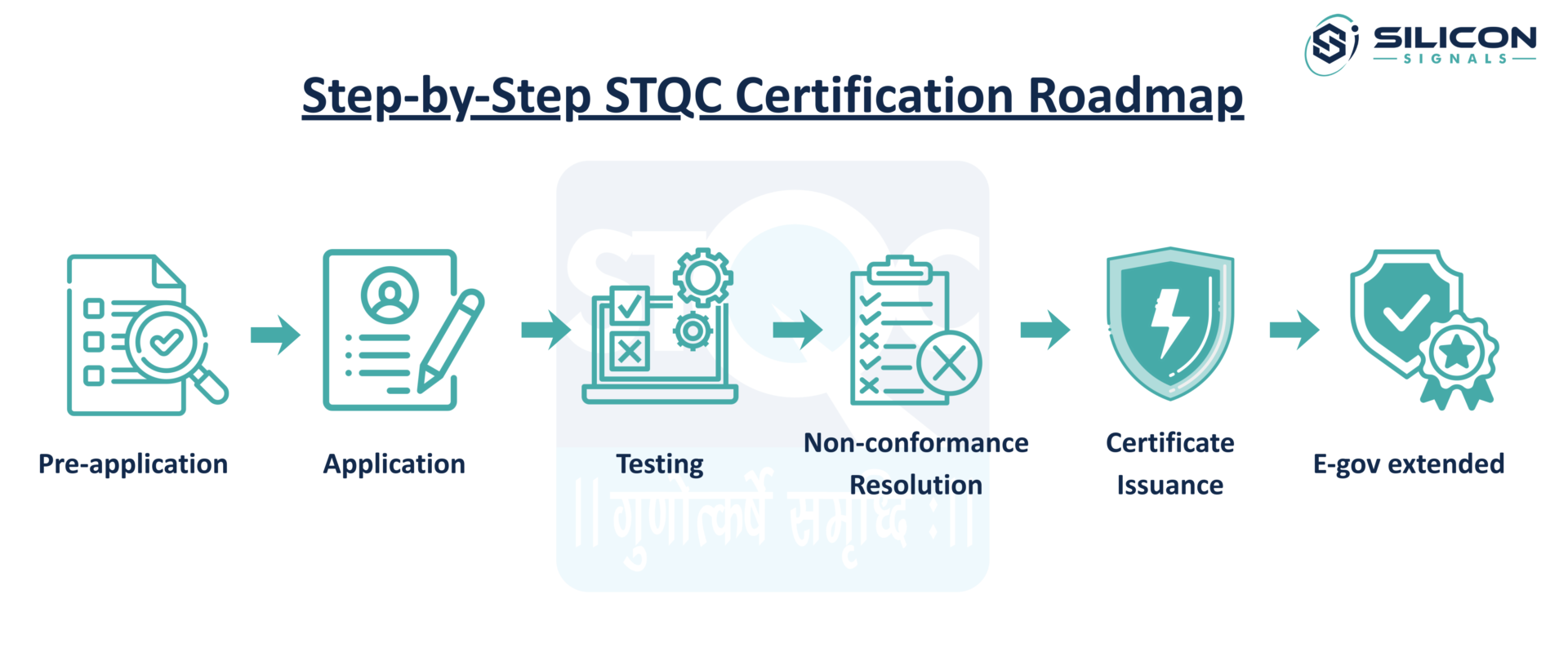
What the STQC Certification Journey Actually Looks Like
Here’s a simplified, real-world sequence teams typically follow:
- Pre-Audit (Gap Analysis)
Identify issues early to avoid expensive redesigns later. - Application Submission
Documentation, samples, and fee submission to STQC labs. - Testing Phase
Safety → EMC → Environment → Cybersecurity → Performance - Corrective Actions
Fixing any non-conformities found during testing. - Certification & Surveillance
Certification validity plus periodic check-ins.
It’s much smoother when engineering teams plan for compliance from the very beginning instead of scrambling at the end.
How Certified Camera Companies Are Benefiting
Camera OEMs and system integrators that embrace STQC early are seeing tangible results:
- Winning Smart City and Police Department tenders
- Achieving lower field failure rates
- Securing export opportunities in regulated markets
- Improving product pricing power due to certification-backed trust
- Reducing RMA and warranty costs
STQC doesn’t just validate your product; it strengthens your business.
Why You Should Think About STQC Early in the Design Stage
Planning STQC only at the end of development often leads to:
- Redesigns
- Delays
- Added cost
- Missed tender deadlines
But when certification-ready design practices are applied from Day 1, you get:
- Cleaner electrical architecture
- Better thermal performance
- Stronger security posture
- Faster approvals
- Less rework
Good engineering = smoother certification = faster market entry.
How Silicon Signals Helps Camera Teams Build STQC-Ready Products
At Silicon Signals, we don’t treat certification as a final checkbox.
We integrate compliance into your engineering lifecycle:
- End-to-end camera hardware architecture
- Sensor and ISP pipeline design
- Firmware and cybersecurity best practices
- Reliability engineering
- Pre-compliance testing for STQC, ONVIF, NDAA, CE, BIS, and more
Whether you’re building your first surveillance camera or scaling a full product line, we help ensure you reach certification without painful last-minute changes.
Conclusion
STQC certification has become a strategic requirement for camera manufacturers in India. It drives product quality, builds trust with enterprise buyers, and opens doors to high-value government and smart-city deployments.
When done right, STQC is not a hurdle, it’s a competitive advent.
