

Most of the time, embedded camera demos look great on a lab bench. Images that are clean. Colors don’t change. Exposure that can be predicted. Then the product goes into the real world, and things start to go wrong. There is a flicker. Shadows hide details. Blow out the highlights. Colors move. You never know when noise will show up.
One of the most common and expensive problems with an embedded camera system is the gap between how well it works in the lab and how well it works in the real world. And it hardly ever comes down to just one bug or bad part.
This is the thing. Engineers don’t make cameras fail in real lighting because they don’t care. They don’t work because real lighting is messy, changes quickly, and often goes against what was thought to be true during the design phase.
Let’s break it down from the ground up, without any marketing fluff or general advice, and see what really makes embedded camera systems have trouble when they leave controlled settings.
The Illusion of Controlled Lighting
Most embedded camera systems are tested in lighting conditions that are easy to work with, not realistic. Even when test setups try to mimic real-world situations, they usually leave out important factors.
The lighting in the lab is stable. Not so much for outdoor lighting. Lights that aren’t real flicker. The angle, color temperature, and intensity of sunlight change all the time. Reflections show up on surfaces you didn’t expect. People or machines passing by make shadows move.
In embedded system design, a digital camera often assumes that changes in exposure, gain, and white balance will make up for them. In real life, those controls always act after the fact.
Struggling with inconsistent image quality outside the lab?
Why Static Assumptions Break
Engineers often tune image pipelines based on the idea that changes in lighting will happen slowly and in a way that is easy to predict. Both of these assumptions are wrong in real life.
Within a few meters, a factory floor can go from fluorescent to LED. In a matter of seconds, a smart kiosk near a window can go from diffuse daylight to direct sunlight. A camera on a car can see headlights at night and then see shadows under an overpass a few seconds later.
This really means that any tuning based on static test images is weak by nature.
Sensors See Light Differently Than Humans
The difference between how people see things and how sensors see things is one of the most misunderstood parts of embedded camera failure.
People are very good at adjusting to changes in light. We make brightness, color, and contrast normal without even thinking about it. But image sensors don’t.
An embedded camera system built into something captures photons, not context. The sensor must choose what to give up if the scene has a lot of contrast.
Dynamic Range Limits
Many failures are due to having too high expectations for a dynamic range.
A scene that looks balanced to the human eye may have too much dynamic range for the sensor to use. Bright spots cut off. Dark areas turn into noise. After that data is lost at the sensor level, there is no way to get it back by adjusting the ISP.
This is especially clear in applications like surveillance, industrial inspection, or outdoor kiosks, where both shadows and highlights are important.
The Noise Trade-Off
The sensor increases gain when the light goes down. Gain makes signals stronger, but it also makes noise stronger. To make up for this, engineers sometimes turn up the noise reduction too much, which destroys fine details that algorithms later need.
This trade-off is necessary in a digital camera in embedded system pipeline. The mistake is acting like it doesn’t exist.
Auto Exposure Is Not a Silver Bullet
People often think of auto exposure as a safety net. If the lighting changes, AE will take care of it. AE is actually one of the most common reasons for failure.
Reaction Time Matters
Auto exposure responds to changes after they happen. The system is always trying to find stability, but it never does.
Lights that flicker, machines that spin, or shadows that move can make AE oscillate. The exposure goes up and down, which makes the video feeds look like they are pumping with brightness.
ROI Confusion
Most AE algorithms depend on the average brightness of the whole frame or certain areas of interest. Scenes in real life don’t often work together.
If a bright object comes into the frame, AE might make everything else darker. If a dark object takes up most of the ROI, highlights will be lost. This is especially bad for embedded vision systems that need consistent contrast to find or measure things.
The algorithm is not to blame for failure. The idea that one exposure strategy works for all scenes.
White Balance Breaks Under Mixed Lighting
First, white balance problems are hard to see. The colors don’t quite look right. Skin tones change. Materials don’t seem to be the same.
Then analytics don’t work. It is no longer possible to trust color-based classification. The colors of the brand no longer match what people expect.
Mixed Color Temperatures Are the Norm
In real life, there are often many light sources with different color temperatures. Sunlight is coming in through a window. Lighting is warm inside. LED signs that look cool.
Usually, an embedded camera system makes one white balance correction for the whole frame. That fix is never right for the whole scene. This really means that color accuracy is no longer a guarantee, but a trade-off.
Temporal Instability
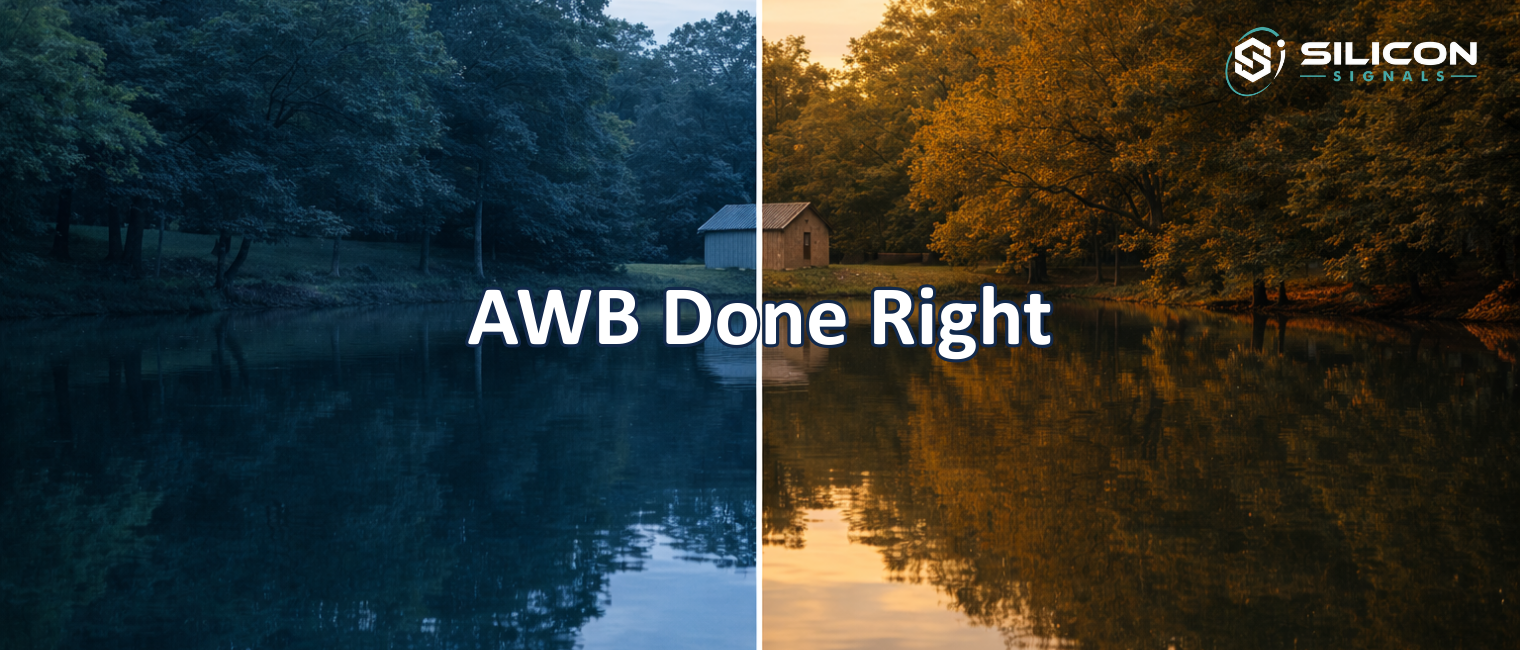
The auto white balance can also change over time. AWB recalculates as the scene changes, which makes colors change even when the lighting looks stable to the naked eye.
This drift can be worse than being a little wrong but stable for systems that need long-term consistency.
ISP Defaults Are Not Real-World Tuned
Image Signal Processors come with preset tuning profiles. These profiles are meant to work well for a lot of different situations, but not necessarily the best for yours.
Generic Tuning, Specific Failures
Most of the time, default ISP settings put looks ahead of data security. Sharpening makes edges sharper, but it also makes noise louder. Noise reduction makes pictures look smoother, but it takes away texture. Contrast curves look good on screens, but they cut off useful information.
These trade-offs have a direct effect on downstream processing in an embedded camera system. A person might prefer a clear picture. A machine vision algorithm usually doesn’t.
The Cost of Late Tuning
People often put off ISP tuning until the end of the project. At that point, you can’t change your mind about the hardware. It’s no longer easy to change the sensor selection, lens characteristics, or lighting limits.
At that point, tuning is more about fixing problems than making things better.
Struggling with unstable image quality in real lighting?
Lenses
The lens is an important part of the camera. But engineers often pay as much attention to lens selection as they do to sensors or processors.
Real-World Optical Issues
Lenses cause flare, ghosting, chromatic aberration, and vignetting when there is real light. In a lab, these effects are often hard to see, but they are easy to see when the light is strong or at an angle.
A cheap lens might pass the first tests, but it might not work well in sunlight at low angles or when pointed at light sources at night.
Focus Stability Over Temperature
Changes in temperature affect focus. The barrels of plastic lenses get bigger. Mechanical tolerances change. This is easy to miss in controlled settings. In outdoor or industrial settings, it can slowly lower the quality of images over time.
People often blame software problems with embedded cameras, but the problem starts with the optics.
Synchronization Problems and Algorithms
Flicker and Rolling Shutter
Many artificial lights flicker at the same frequencies as power lines. Rolling shutter sensors take samples of the scene over time, not all at once.
Banding happens when the timing of exposure and the frequency of flickers don’t work well together. The problem can go away in one country and come back to another because the mains frequencies are different.
A digital camera in embedded system design that doesn’t take this into account is weak because of where it is.
Multi-Camera Desynchronization
In stereo or multi-camera systems, small differences in exposure or timing become clear when the light is real. One camera changefaster than the other. Shadows look different. Depth estimation gets worse.
These failures don’t happen very often in lab tests with just one camera.
Training Data Bias
When machine learning models are trained on clean, well-lit datasets, they have a hard time with glare, shadows, or changes in color. The camera didn’t break by itself. The whole system broke down.
If the built-in camera system takes pictures that are outside of what the model expects, the accuracy drops quickly.
Feedback Loops
Some systems send the output of the algorithm back to the camera controls. For instance, the level of confidence in detection affects exposure or gain. When the lighting isn’t stable, these feedback loops can make mistakes worse instead of fixing them.
The outcome is a system that seems smart on paper but doesn’t work well in real life.
Environmental Factors
Real lighting is more than just where the light comes from. It’s about the light that interacts with the environment.
Reflective and Absorptive Surfaces
Dark fabrics, glass, metal, and polished floors. Light behaves very differently on these surfaces. Sensors can be overwhelmed by specular highlights. Dark materials don’t absorb light evenly.
If these materials aren’t in the test environment, failures will happen later.
Weather and Contamination
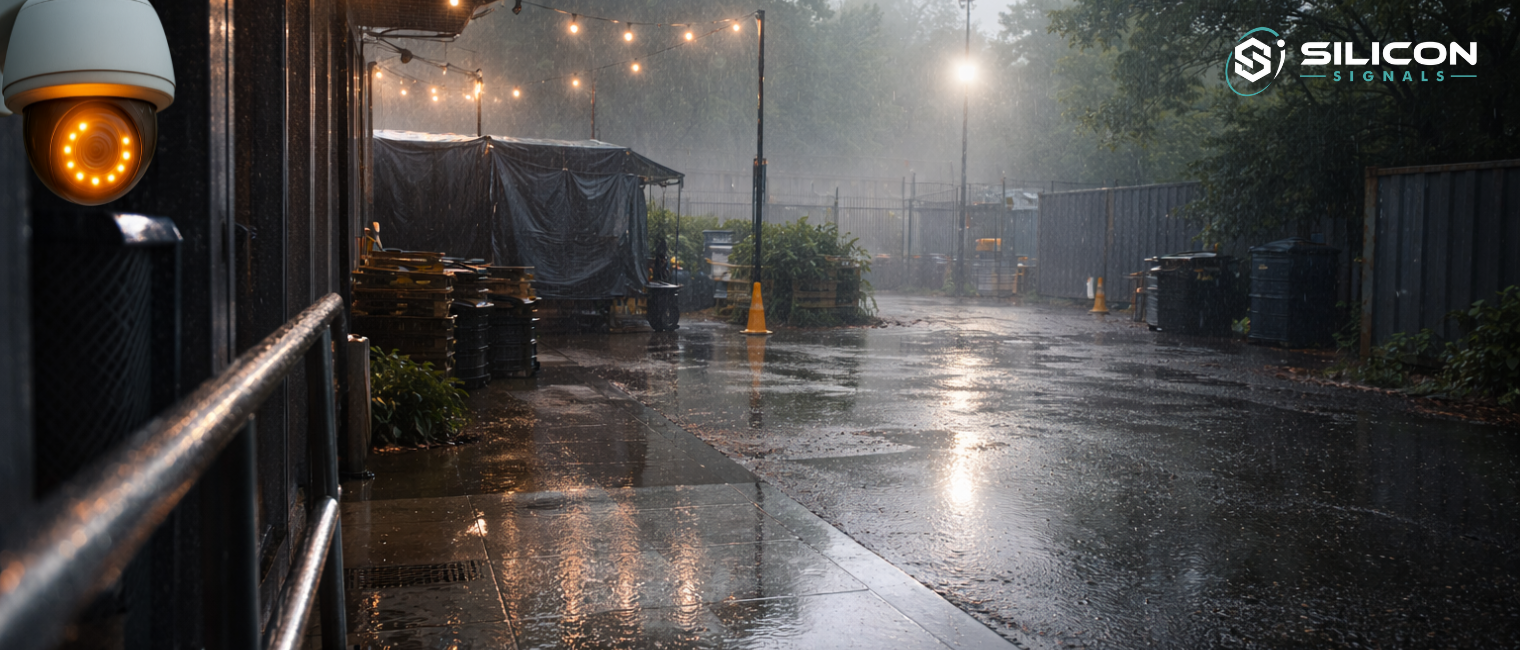
Rain, fog, dust, and dirt can get into outdoor embedded camera systems. Each one changes the way light hits the sensor. The contrast goes down. More scattering happens. The color changes slightly.
These are not rare cases. These are normal conditions for operation.
Integration of Product
Hardware and Software Mismatch
A sensor with a high dynamic range might not work well with an ISP setup that takes away that benefit. A lens might work better than the sensor it is connected to. The way software works may not match the way hardware works.
These mismatches usually only show up when the lighting is complicated.
Late Discovery Costs More
The longer it takes to find lighting problems, the more it costs to fix them. Field updates can change settings, but they can’t change the laws of physics.
This really means that designing with lighting in mind isn’t an optimization step. It’s a basic need.
What This Means for Embedded Camera Systems
If you’re building a camera system that goes inside something else, the question isn’t whether real light will show flaws. Yes, it will. The question is how much wiggle room you built in before that happens.
A digital camera in embedded system design must be tested in both very bright and very dark settings. It needs to be tuned with an understanding of what the downstream algorithm needs, not just how it looks. And it has to be tested in places that are hard to get to, change all the time, and sometimes look bad. Not doing these steps will not save you time. It puts off failure.
Conclusion
We have seen this pattern over and over again in deployments in the industrial, automotive, and smart edge sectors at Silicon Signals. Embedded camera systems don’t break down because the teams don’t know what they’re doing. They fail because engineers often realize that lighting is a system-level limit.
Lighting should be treated as a first-class design input, from choosing the right sensor and lens to tuning the ISP and integrating algorithms. Not something that came to mind later. Not a problem in the field. Not something that can be fixed by changing one more parameter.
Camera systems are reliable because they work in real-world lighting. The difference between a demo that impresses and a product that works after deployment is designing for it early.
That way of thinking is what makes embedded vision go from a lab success to a system that works in the real world.
