
×
Request a Free Consultation
Interested in collaborating with Silicon Signals on your next big idea? Please contact us and let us know how we can help you.
Interested in collaborating with Silicon Signals on your next big idea? Please contact us and let us know how we can help you.
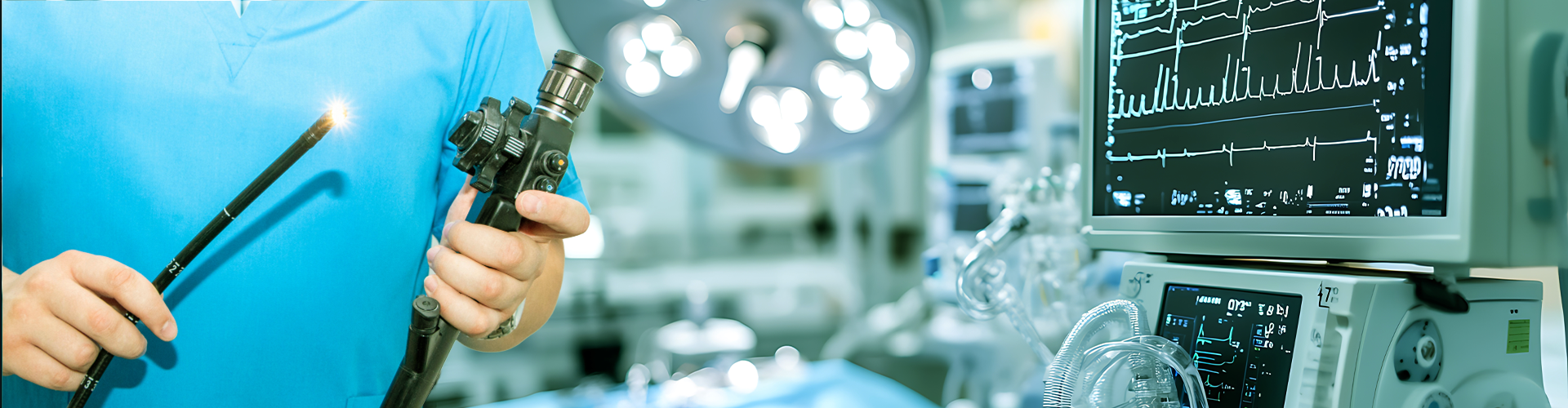
Our company, an embedded product design services provider, was engaged by a client to develop an advanced endoscopic camera system for minimally invasive surgeries. The client required ultra-low latency (<50 ms) for real-time surgical preview, high-resolution 4K imaging at 30 fps, and reliable operation within the constraints of the human body. The solution was engineered on the NXP i.MX8M Plus System-on-Module (SoM), powered by a custom embedded Linux distribution. This case study outlines the client’s challenges, our engineering approach, deep technical implementations, and the measurement techniques used to meet stringent medical requirements:
The client required sub-50 ms glass-to-glass latency for real-time surgical preview with zero perceptible delay.
Needed stable 4K@30 fps output, accurate color reproduction, and smooth performance for medical-grade visualization.
The device had to operate safely in sealed, sterilizable enclosures, meeting ISO 10993 and IEC 60601-1-2 standards with no active cooling.
Developing surgical imaging involved overcoming client-critical challenges around latency, temperature, and medical compliance. Delivering 4K video, high clinical standards, and real-time imaging within compact hardware pushed the limits of the client’s required performance.
The customer faced difficulty achieving <50 ms end-to-end latency while handling high-bandwidth 4K video over MIPI CSI-2.
Ensuring zero frame drops and maintaining stable 4K@30 fps performance under real-time constraints was a major challenge.
Building a compact, sterilizable device required strict thermal limits, while meeting medical compliance added design complexity.
Linux defaults introduced buffering delays; the customer needed deterministic behavior through V4L2, DMA, and PREEMPT_RT optimizations.
Silicon Signals helped the customer construct a compliant, low-latency 4K endoscopic imaging systems.
Linux 5.15 + PREEMPT_RT, scheduler tuning, CPU affinity for video threads.
Reduced V4L2 buffering, prioritized CSI-2 interrupts, DMA zero-copy paths.
GStreamer with GPU-assisted color conversion (imxvideoconvert_g2d → kmssink).
Passive copper heat spreader, CPUFreq scaling, software thermal monitoring.
ISP tuning for low-light noise reduction, GPU-based sharpening.
Full testing to ISO 10993, IEC 60601-1-2, and IEC 62304.
Silicon Signals thrive on engineering excellence, converting ambitious ideas into reliable, real-world solutions.
Let’s build the right medical imaging solution for your business.
Built for Compliance. Built for Performance.
NXP i.MX8M Plus, ON Semi AR1335 camera, HDMI display output.
C, C++, GStreamer pipeline scripting.
Yocto-based Linux 5.15 with PREEMPT_RT.
cyclictest, ftrace, v4l2-ctl, GStreamer latency tracer, lm-sensors.
The initiative delivered measurable improvements in real-time imaging, stability, and medical-grade compliance for the client.
Total system latency achieved 45 ms, staying well below the 50 ms requirement.
Smooth 4K video at 30 fps with zero frame drops for stable operation.
Continuous operation maintained under 70 °C without needing active cooling.
Successfully passed all required medical compliance and safety tests.
If you're ready to create a high-precision, ultra-low-latency endoscopic imaging solution, this case study shows what’s possible when engineering excellence meets medical-grade innovation.
+91 94087 30545
sales@siliconsignals.io
A-802/803, Empire Business Hub, Science City Rd, Ahmedabad - 380060, Gujarat, India
Share Details