

Introduction
Engineers designing embedded vision systems face an early and consequential decision: should the architecture be built around a camera module or a camera board? These two terms appear frequently across hardware product discussions, and they are often used interchangeably. They should not be. The gap between them is architectural, not cosmetic. According to a MarketsandMarkets report, the global machine vision market is projected to reach USD 26.2 billion by 2030, driven by industrial automation, robotics, and AI edge computing. Every product category in that growth curve requires a deliberate choice between camera module designs and camera board configurations. Getting that choice right from the beginning determines cost, size, performance, and time to market.
Understanding camera module meaning is not just a vocabulary exercise. It clarifies how a system will be integrated, what engineering resources it demands, and whether the product can realistically reach production. A camera module vs camera board analysis therefore belongs in the earliest phase of product architecture, not after the PCB layout is already finalized.
What Is a Camera Module?
An embedded camera module is a compact imaging subsystem that integrates the image sensor, lens assembly, interface circuitry, and essential electronics into a single miniaturized package. The product is designed to be dropped into a host device without extensive external support hardware. Smartphones, AI edge platforms, automotive driver monitoring systems, and medical wearables all rely on some form of embedded camera module because the size and power constraints of those devices leave no room for a larger, more exposed imaging system.
The defining characteristic of a camera module is integration density. Engineers who understand camera module meaning in a practical sense recognize that the value of this form factor lies in what it removes from the host board: discrete sensor circuitry, lens mount hardware, and signal conditioning components are all absorbed into the module itself. This compresses development time and reduces the hardware expertise required at the system level.
Modern embedded camera modules communicate with host processors through MIPI CSI-2, USB, or board-to-board FPC connectors. They are designed for minimal power usage and compact thermal packages, making them ideal for portable applications that require batteries, where incorporating the complete camera module into the hardware design on the visible circuit board poses difficulties.
Key Characteristics of an Embedded Camera Module
The camera module meaning extends beyond miniaturization. These components are engineered for high-volume manufacturing. Because all imaging subsystems are pre-integrated, procurement and assembly become straightforward: a single part number replaces what would otherwise be a set of discrete components sourced and placed separately. For production environments that require repeatability and supply chain simplicity, the camera module vs camera board decision often resolves in favor of the module when volume exceeds tens of thousands of units.
ISP tuning inside an embedded camera module is calibrated for the specific sensor and lens combination within the package. This pre-tuned behavior accelerates bring-up and reduces the image quality variation that can occur when engineers assemble equivalent systems from separate components. However, it also limits post-integration flexibility. If the imaging parameters need to change, the module itself may need to change.
What Is a Camera Board?
A camera board, sometimes called a board-level camera or PCB camera, places the image sensor, lens interface, power circuitry, and data interface components on an exposed printed circuit board. Unlike the sealed form factor of an embedded camera module, the camera board makes every hardware element accessible. Engineers can probe signals, replace components, modify power rails, and attach extension boards without destructive disassembly.
The camera hardware design approach represented by a board camera prioritizes flexibility over compactness. Industrial machine vision systems, robotics platforms, development environments, and medical diagnostic equipment all use board cameras because those applications demand hardware customization that a sealed embedded camera module cannot provide. When an imaging system needs to support multiple sensor options, custom lens mounts, or external trigger inputs, the board camera architecture accommodates those requirements without a redesign.
A camera module vs camera board comparison on physical size shows an obvious difference: camera boards are larger. But that physical overhead buys thermal headroom. Board cameras dissipate heat across a larger surface area, which supports high frame rate operation and extended duty cycles that would thermally stress a compact module. In industrial inspection systems running continuous imaging at elevated temperatures, this thermal advantage translates directly into system reliability.
Camera Hardware Design Flexibility on Board Cameras
The camera hardware design on a board camera exposes the full signal path between the sensor and the interface output. This accessibility is critical during development and validation. When image quality issues arise, such as banding artifacts, noise floor problems, or color accuracy failures, engineers can isolate whether the fault lies in the sensor, the power supply, the interface signal integrity, or the ISP configuration. A sealed embedded camera module narrows the diagnostic surface and sometimes requires returning the entire module to the manufacturer for analysis.
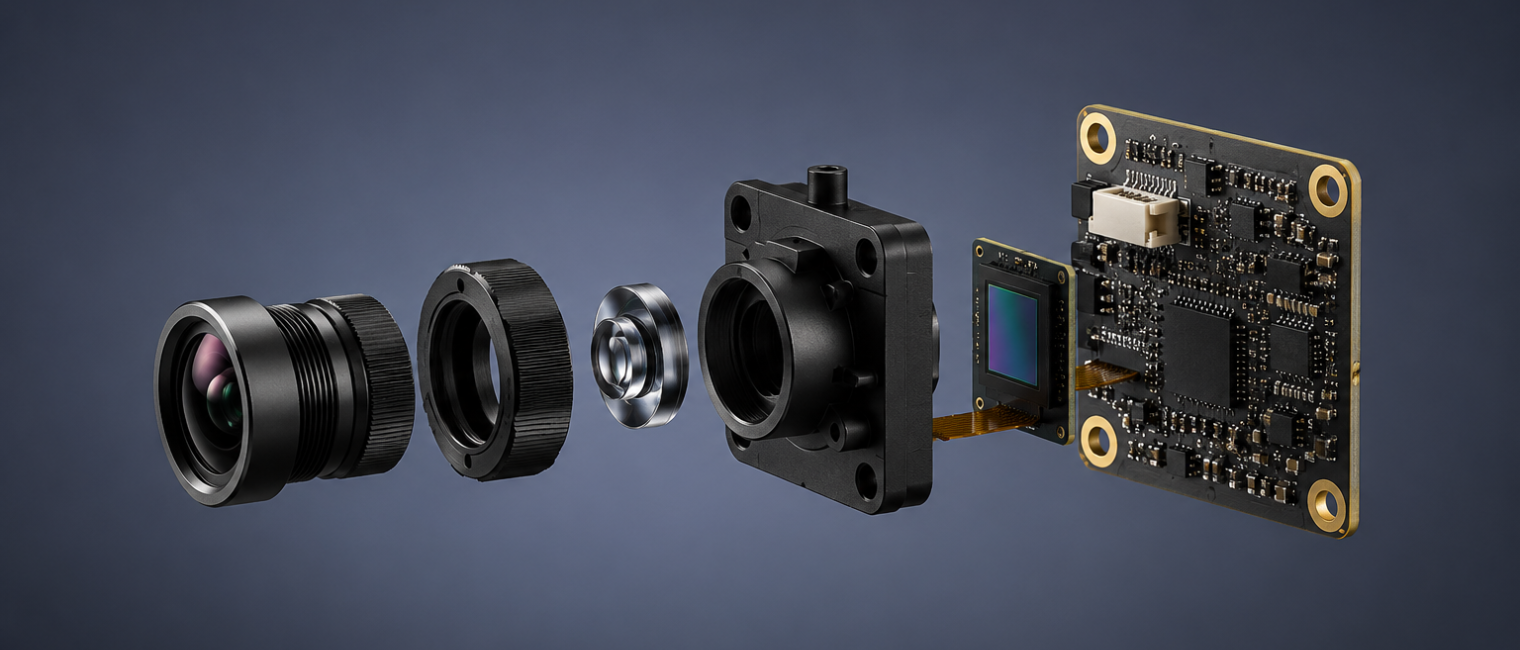
Industrial environments also demand connectors and interfaces that consumer-grade embedded camera modules do not carry. Camera boards support GigE Vision, USB3 Vision, Camera Link, CoaXPress, and GMSL2, protocols specifically developed for industrial machine vision integration. This interface breadth is a core part of what defines camera hardware design at the board level, and it is one of the primary reasons industrial engineers choose board cameras over compact modules. Choosing the right architecture early simplifies integration and reduces redesign effort later in development.
Planning to develop a smart camera product or machine vision system?
Camera Module vs Camera Board: Side-by-Side Comparison
The following table presents a structured comparison across the parameters that matter most in embedded vision product development.
| Parameter | Camera Module | Camera Board |
|---|---|---|
| Design Approach | Compact integrated package | PCB-based open structure |
| Physical Size | Extremely compact, miniaturized | Larger footprint |
| Integration Style | Embedded inside products | Used as subsystem or dev platform |
| Hardware Access | Limited access to circuitry | Full access for customization |
| Power Consumption | Optimized for low power | Typically higher power draw |
| Thermal Management | Compact, constrained | Better heat dissipation |
| Manufacturing Fit | Ideal for mass production | Better for industrial builds |
| Development Flex | Limited modification scope | High flexibility for prototyping |
| Common Interfaces | MIPI CSI, FPC connectors | USB, Ethernet, MIPI, LVDS |
| Primary Use Cases | Consumer electronics, AI edge | Industrial vision, robotics |
This camera module vs camera board comparison makes clear that neither architecture is universally superior. The correct choice depends on what the product actually demands across its full lifecycle, from prototype to production.
Internal Architecture: What Lives Inside Each System
Both a camera module and a camera board share a set of core imaging components, but the way those components are packaged, connected, and accessible differs fundamentally.
Image Sensor
The image sensor converts light into electrical signals and determines the fundamental imaging capability of any embedded camera module or board camera. CMOS sensors dominate modern embedded vision because they offer faster readout, lower power draw, and lower manufacturing cost compared to CCD alternatives. Sensor selection drives many downstream camera hardware design decisions, including power supply voltage, interface type, and ISP pipeline requirements.
Lens Assembly and Optical System
The lens determines field of view, focal length, depth of field, and optical distortion characteristics. In a compact embedded camera module, the lens is typically fixed or autofocus-capable within a sealed housing. In a board camera, the lens mount is often a standard format such as C-mount or CS-mount, allowing lens interchange without replacing the imaging hardware. This replaceability is part of why camera hardware design at the board level scales well across different inspection tasks in machine vision environments.
Fixed-focus lenses serve applications where the working distance does not change. Variable-focus and motorized zoom lenses serve applications where the scene distance or magnification requirement shifts dynamically. Wide-angle and fisheye optics cover broad surveillance fields. Telephoto lenses support long-distance inspection. Macro lenses handle close-up imaging in medical and precision manufacturing contexts. Each of these optic types integrates differently into a camera module vs camera board architecture, and the integration method affects how the camera hardware design handles alignment, calibration, and replacement.
Image Signal Processor
The Image Signal Processor converts raw sensor output into visually optimized images or video streams. ISP tuning covers exposure control, white balance, color correction matrix calibration, noise reduction, HDR tone mapping, lens shading correction, and sharpness enhancement. Whether the ISP is embedded inside an embedded camera module or operating as a discrete component on a camera board, its tuning quality determines the final imaging output regardless of sensor quality. Poor ISP tuning with a high-end sensor produces worse results than good ISP tuning with a mid-range sensor.
In a camera module vs camera board comparison of ISP accessibility, board cameras win on flexibility. The ISP pipeline on a board camera is accessible for firmware modification, parameter adjustment, and algorithm replacement. An embedded camera module with an integrated ISP provides less post-integration control, which can be a limitation when imaging requirements change during product refinement or after field deployment.
Interface and Communication
The interface layer determines how image data moves from the camera to the host processor. An embedded camera module typically uses MIPI CSI-2 or USB, which are appropriate for high-speed data transfer in consumer and edge AI products. Board cameras support a broader set of interfaces including GigE, CoaXPress, Camera Link, and GMSL2. This interface breadth is part of what makes camera hardware design at the board level well-suited for industrial, automotive, and long-distance transmission applications.
Application Areas
Embedded Camera Modules in Consumer and AI Edge Products
The embedded camera module dominates in products where volume, size, and power are the primary engineering constraints. Smartphones are the highest-volume application, but the same logic applies to AI edge computing devices, smart home sensors, automotive driver monitoring, and portable medical diagnostics. In each case, the goal is to integrate imaging capability without consuming significant board space or requiring dedicated imaging engineering at the system level.
Facial recognition endpoints, people counting sensors, inventory management systems, and autonomous mobile robots operating in space-constrained environments all use embedded camera modules. The camera module meaning in these contexts is practical: it is a pre-qualified imaging subsystem that accelerates product development and simplifies the bill of materials.
Camera Boards in Industrial and Machine Vision Systems
Camera boards serve machine vision tasks where imaging requirements are precise and variable. Industrial inspection systems performing defect detection, barcode reading, OCR, and dimensional measurement require imaging parameters that can be tuned per application. A camera hardware design built on a board camera can accommodate different sensors, lenses, and interfaces as requirements evolve.
Robotics platforms use board cameras for SLAM, obstacle avoidance, and object manipulation. Medical imaging equipment uses them for endoscopy, dental imaging, and diagnostic visualization where image quality requirements and regulatory demands push against the limitations of sealed embedded camera modules. Surveillance infrastructure uses board cameras in dome and PTZ configurations where lens optionality and hardware serviceability extend system lifecycle.
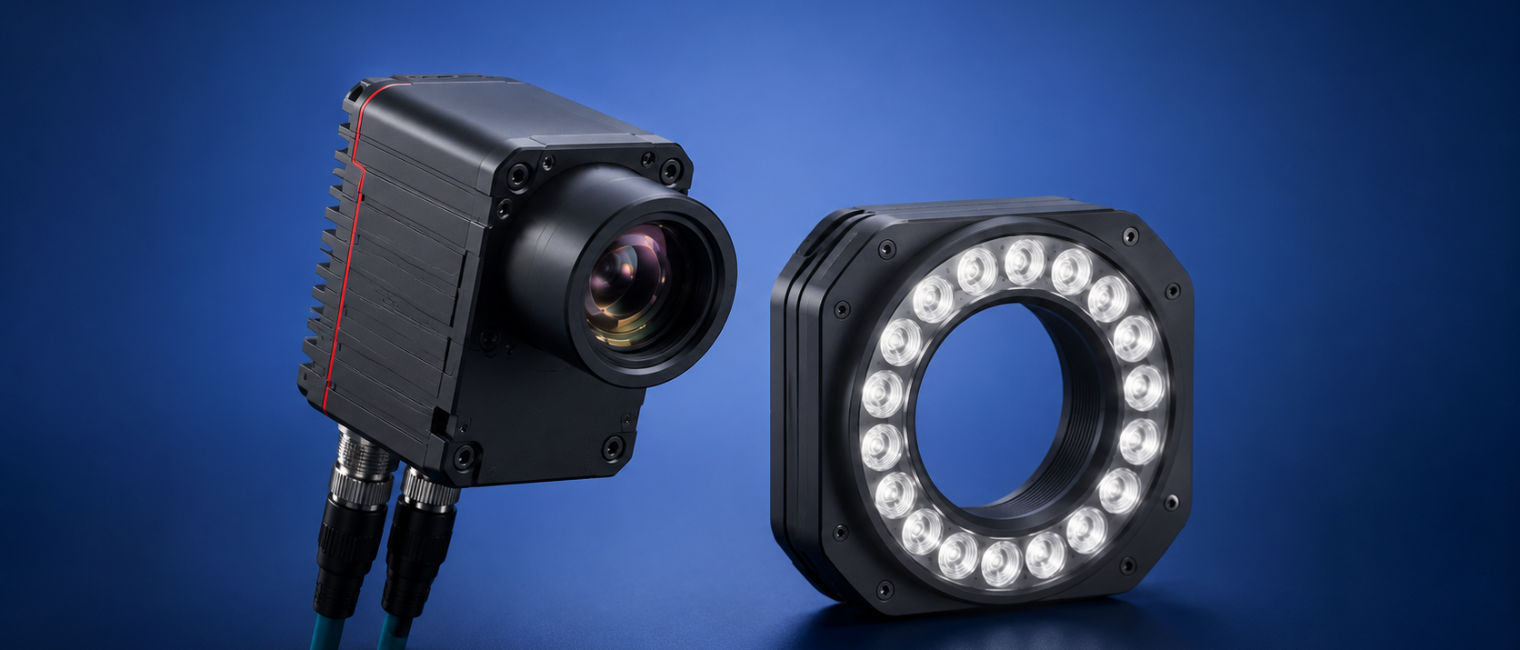
In a camera module vs camera board context, industrial engineers consistently favor board cameras when the imaging task requires validation, serviceability, or interface customization. Consumer and AI edge engineers favor embedded camera modules when volume, space, and cost per unit drive the decision.
Choosing between a camera module and a camera board for your next product?
Emerging Directions in Embedded Camera Technology
The camera module vs camera board decision is evolving as imaging technology advances. Several technical developments are reshaping what each architecture can deliver.
Global shutter sensors are becoming more accessible at the module level, which extends embedded camera module applicability into industrial inspection and robotics use cases that previously required board cameras with global shutter sensors. As global shutter embedded camera modules become cost-competitive, the line between consumer and industrial camera hardware design is shifting.
HDR imaging, multi-camera synchronization, and time-of-depth integration are advancing across both form factors. These capabilities require more sophisticated camera hardware design at the sensor timing, interface, and ISP levels. Products that require multi-sensor fusion, such as autonomous vehicles and advanced robotics, are driving board camera adoption for their flexibility in accommodating multiple synchronized imaging channels.
Low-light performance is improving through sensor-level improvements in pixel size and read noise, combined with AI-assisted denoising running on edge processors. This combination is making compact embedded camera modules viable for surveillance applications that previously required larger board cameras with physically larger sensors. Understanding camera module meaning in this advancing technical context means recognizing that module capabilities are expanding, not static.
Choosing Between a Camera Module and a Camera Board
The camera module vs camera board decision reduces to a set of product-specific engineering questions that must be answered honestly before architecture is fixed.
If the product is volume-driven, space-constrained, battery-powered, or requires minimal imaging engineering at the system level, an embedded camera module is the architecturally sound choice.
If the product requires hardware customization, industrial interface protocols, extended thermal performance, or ongoing sensor and lens interchangeability, a board camera built on a deliberate camera hardware design is the correct foundation. Neither form factor is inherently superior. Both serve defined engineering purposes, and selecting the wrong one adds cost and schedule risk that compounds through every subsequent development phase.
Products that require both compact integration and industrial performance, such as edge AI inspection cameras or compact autonomous navigation systems, sometimes combine a miniaturized board camera approach with the interface discipline of an embedded camera module. This hybrid camera hardware design approach requires a team that understands both form factors deeply.
Conclusion
The camera module vs camera board question is one of the most consequential early decisions in embedded vision product development. Camera modules deliver miniaturization, manufacturing simplicity, and optimized power consumption for products where those factors dominate. Camera boards deliver hardware flexibility, interface breadth, and thermal headroom for applications where performance and customization outweigh compactness. Understanding camera module meaning and board camera architecture in technical depth is what separates teams that make informed decisions from teams that discover their architectural mistakes during production ramp.
ISP tuning quality, driver reliability, interface compliance, AI integration timing, and validation discipline apply regardless of which form factor is chosen. These are camera hardware design fundamentals that determine whether an embedded camera module or board camera delivers on its technical promise in a real product.
Silicon Signals is a camera design company specializing in end-to-end embedded camera development. The company covers camera sensor bring-up, ISP tuning, Linux and Android camera framework integration, MIPI CSI pipeline optimization, multi-camera synchronization, AI integration, driver development, and production readiness across NXP i.MX, NVIDIA Jetson, Qualcomm, Rockchip, and TI platforms. For engineering teams navigating the camera module vs camera board decision or building a full embedded camera module or board camera system from design to production, Silicon Signals provides the hardware and firmware depth that product development requires.
