Introduction
If you are trying to figure out the dome vs bullet camera question, you are not alone. This confusion is very common, especially when you are setting up a new surveillance camera system for your home, shop, or office for the first time. Add a turret IP camera into the mix and things can feel even more confusing, since the names sound technical but the actual differences are quite simple once explained properly. This guide breaks down all three in plain, everyday words, without any heavy jargon, so you can pick the right surveillance camera for your space without any second guessing or wasted money.
Understanding the Three Main Types of Surveillance Cameras
Before we get into the dome vs bullet camera comparison, let us first understand what each surveillance camera actually is, and where a turret IP camera fits into this picture.
What Is a Dome Camera?
A dome camera is round in shape, almost like half a ball, and it is usually fixed on the ceiling. Since the outer cover is tinted, people cannot easily tell which direction the lens is facing. This small detail works as a quiet deterrent, since a person can never be fully sure if they are being watched at that moment. You will mostly find dome cameras used indoors, in places like shops, corridors, and small offices, where a neat and low key look matters more than an obvious camera hanging on the wall.
What Is a Bullet Camera?
A bullet camera is long and cylindrical, shaped a bit like a small torch or a bullet, which is how it got the name. Unlike a dome camera, it is meant to be seen. That visibility itself acts as a warning sign for anyone with bad intentions, since the camera is right there in plain sight. Bullet cameras are built mainly for outdoor use, and they are known for covering long stretches of area with a sharp, focused view, which makes them a common sight on compound walls and gates across India.
What Is a Turret IP Camera?
A turret IP camera, also known as an eyeball camera, has a ball and socket kind of design where the lens sits just outside the main housing. This gives it a wider field of view compared to a normal dome camera, along with better night vision and much less glare from infrared light. It also allows the installer to tilt and rotate the camera freely, which is not always easy with a fixed dome. This is exactly why more people are now choosing a turret IP camera over the older designs.
Dome vs Bullet Camera vs Turret Camera: Key Differences at a Glance
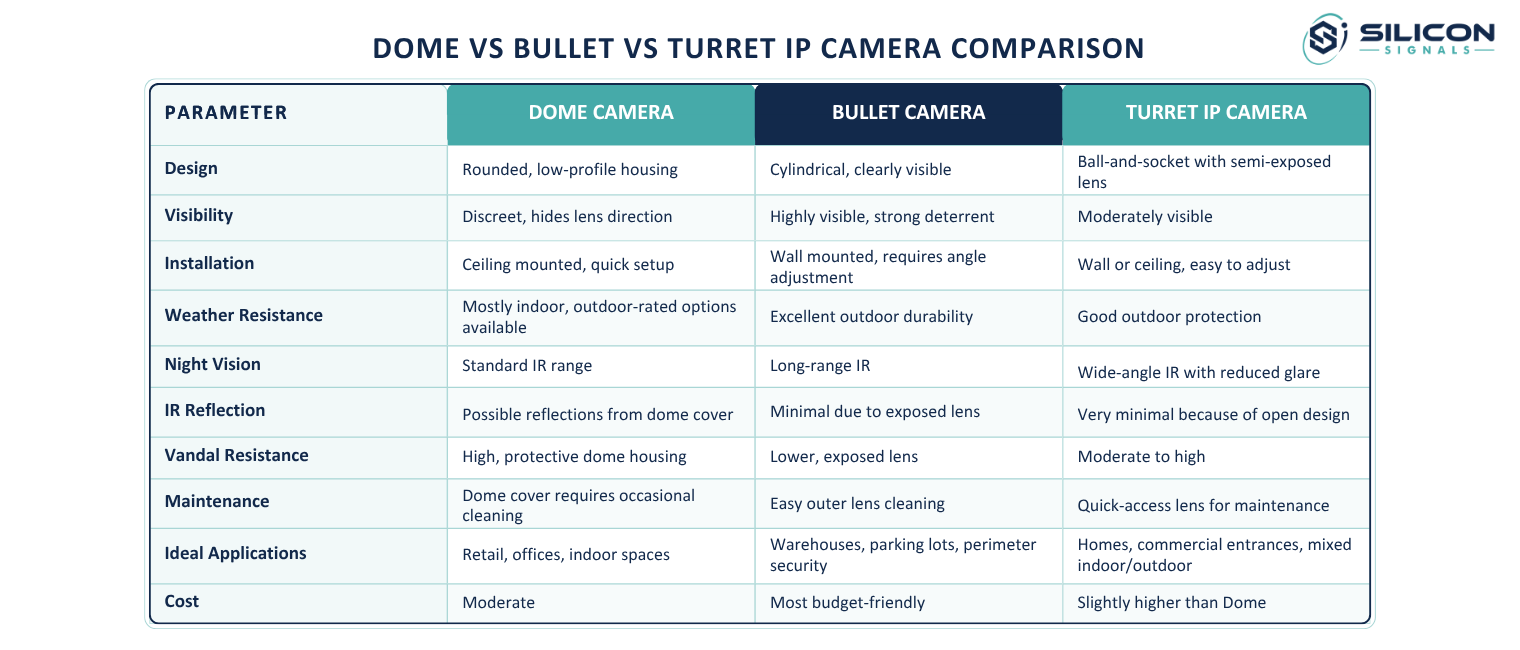
The simplest way to understand the dome vs bullet camera debate, along with where a turret IP camera stands, is to compare them side by side on the things that actually matter during installation. Reading through a table like this can save you hours of research and back and forth with a vendor.
Dome vs Bullet Camera vs Turret Camera: Which One Should You Choose?
The right pick in the dome vs bullet camera decision really depends on where you are installing it, how much light the area gets, and how visible you want your surveillance camera to be. Once you are clear on these basics, the decision becomes much easier to make.
When a Dome Camera Is the Better Choice
A dome camera makes sense when you want quiet, low key monitoring indoors. Since people cannot easily tell which way the lens is pointing, it works well in places where you do not want the camera to feel intrusive. This is why you will often see dome cameras in retail stores, offices, and hotel lobbies, where a subtle look is preferred over an obvious black camera hanging from the wall.
When a Bullet Camera Makes More Sense
A bullet camera is the better choice for open outdoor spaces where covering distance matters more than staying discreet. If you have a large parking lot, a warehouse boundary, or a farmhouse compound to watch, the bullet camera’s visible design and its ability to capture clear footage from far away make it the practical pick. In fact, many Indian farmhouses and factories rely on bullet cameras for exactly this reason.
Common Mistakes When Choosing Between Dome and Bullet Cameras
A lot of people choose their surveillance camera purely based on price and forget to check the lighting or distance requirements of the location first. Putting a bullet camera indoors often looks bulky and out of place, while fixing a dome camera outdoors without a proper weatherproof rating can damage it during the monsoon season, especially in cities that see heavy rainfall every year.
Skipping basic checks like IR range and field of view is another common slip that only becomes obvious once the camera is already installed and not working as expected. Some people also forget to check the cable length and power supply needs before installation, which leads to extra cost and rework later.
Why Turret IP Cameras Are Becoming the Preferred Choice
A turret IP camera manages to solve several small problems that dome and bullet cameras face on their own. This is a big reason why more homes and businesses across India are now moving toward turret IP camera setups instead of sticking to the older options that they have used for years without questioning them.
Superior Night Vision with Reduced IR Glare
Because the lens in a turret IP camera sits outside the housing, it avoids the internal reflection that dome cameras sometimes struggle with at night. This gives you cleaner, sharper night footage with far less white glare in the middle of the frame.
Easier Installation and Maintenance
You can angle a turret IP camera easily during setup without having to unscrew and remove the entire housing like you would with a dome camera. Cleaning the lens also takes just a few seconds compared to opening up a dome cover every time.
Better Image Quality in Challenging Lighting Conditions
Since the turret IP camera lens is not tucked behind a curved dome cover, it handles tricky lighting such as strong backlight or mixed indoor-outdoor environments- more effectively than a standard dome camera. Pairing this design with proper ISP tuning and optimization further improves image quality by enhancing exposure, color accuracy, dynamic range, and low-light performance, resulting in clearer and more consistent surveillance footage.
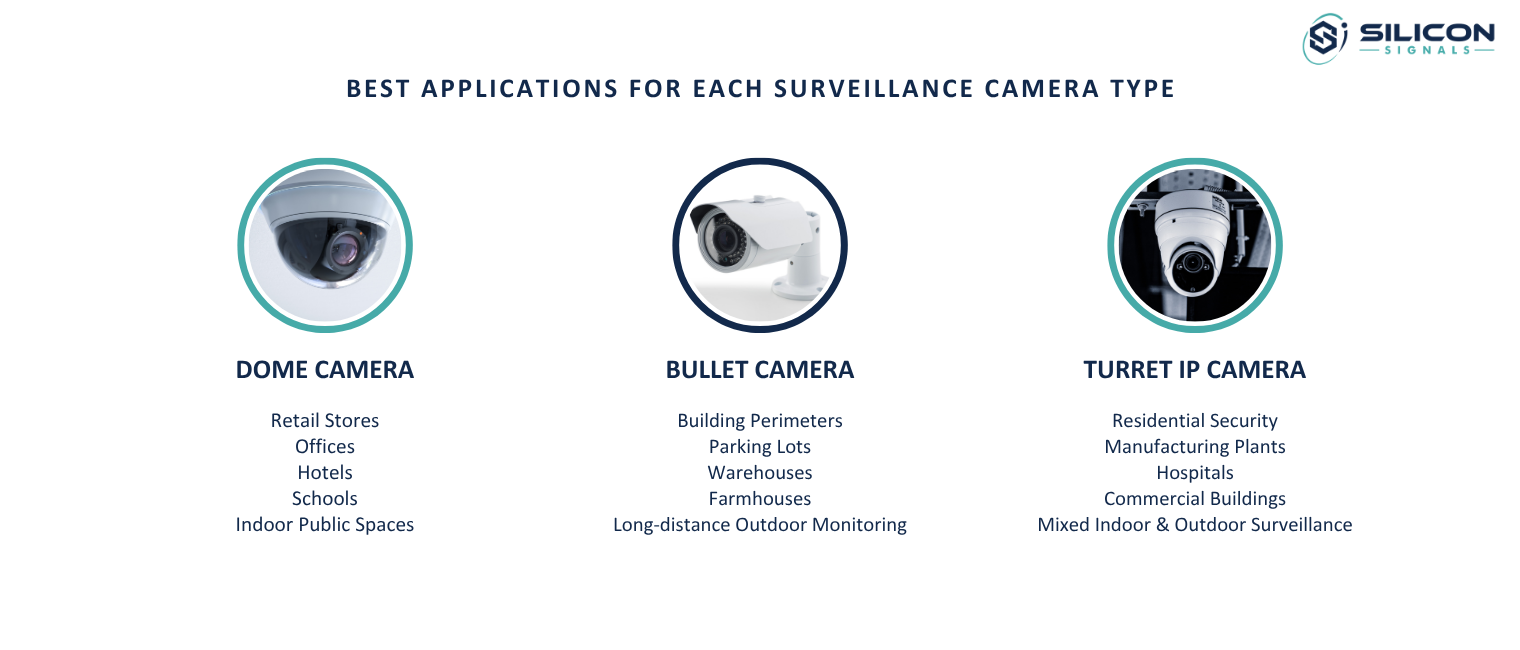
Best Applications for Each Surveillance Camera Type
Where exactly you install a dome camera, bullet camera, or turret IP camera matters just as much as the specifications printed on the box.