

Introduction
From automobiles and industrial automation to smart medical devices and consumer electronics, modern-day electronic devices are mostly reliant upon embedded intelligence for successful operation. Every electronic device relies on firmware to ensure it operates properly.
Firmware is the term used to describe the invisible barrier between the hardware device and the real-world use of the device. Unless a device has firmware installed within it, no hardware will function, even if the most advanced and sophisticated hardware platform has been used.
Embedded firmware development is an engineering discipline that provides embedded intelligence through low-level software development. Embedded firmware developers create low-level software to provide embedded intelligence that can control processors, microcontrollers, sensors, communication interface devices, and the memory contained in an electronic device. Embedded firmware is directly related to the design of the hardware architecture and must be developed according to several restrictions, such as limited memory, limited processing capabilities, and deterministic execution time.
Real-time embedded firmware systems place additional demands on firmware developers when compared with non-real-time systems because of the need for predictable execution of the system, accurate timing, and consistently reliable operation. If a real-time system does not respond within its specified timing, then it could create a malfunctioning safety hazard within the operation of the electronic device itself. Common examples of embedded firmware in a real-time embedded system would be automotive braking systems, medical monitoring systems, robotic systems, and industrial machinery.
MarketsandMarkets says that by 2030, the global market for embedded systems will be worth more than $161 billion. The main reason for this growth is the big increase in the number of IoT products and connected infrastructure that come with smart automation. The demand for skilled people who can make embedded firmware for more complex hardware platforms and their needs for real-time processing will go up as more embedded firmware is developed and specialized real-time operating system (RTOS) firmware is created.
Firmware is becoming more important in product design. Firmware is no longer just a supporting part; it is now the most important part of making a product work better, being more secure, being more reliable, and being easier to maintain over time. Companies that make the next generation of connected devices need to know how firmware works and how to make it for their products to be successful.
Understanding Embedded Firmware Development
Embedded firmware development involves designing and implementing software that operates directly on embedded hardware. This software is stored in non-volatile memory, such as flash or ROM, and functions as the control layer responsible for managing device functionality.
Unlike desktop or cloud applications, firmware works closely with hardware. It talks to processor parts that set up hardware parts, handle interruptions, and control how devices communicate. To write firmware that makes a system run fast, developers must know a lot about the hardware.
Embedded firmware helps get hardware parts ready when a device turns on. It also manages how different parts of a system talk to each other. It makes sure the system runs smoothly and stays stable. Firmware can also handle things like turning off devices to save power, finding errors, and fixing problems.
How hard firmware is to write depends on the device. Simple devices might just use a control loop. Complicated systems use special operating systems that can handle many tasks to communicate with other devices and manage hardware drivers all at once.
As more products connect to the internet. Getting smarter firmware is getting more complicated. It’s not just code anymore. Firmware now handles things like intelligence, combining data from sensors and complex communication rules. Firmware development is turning into creating embedded systems.
Embedded Systems as the Foundation

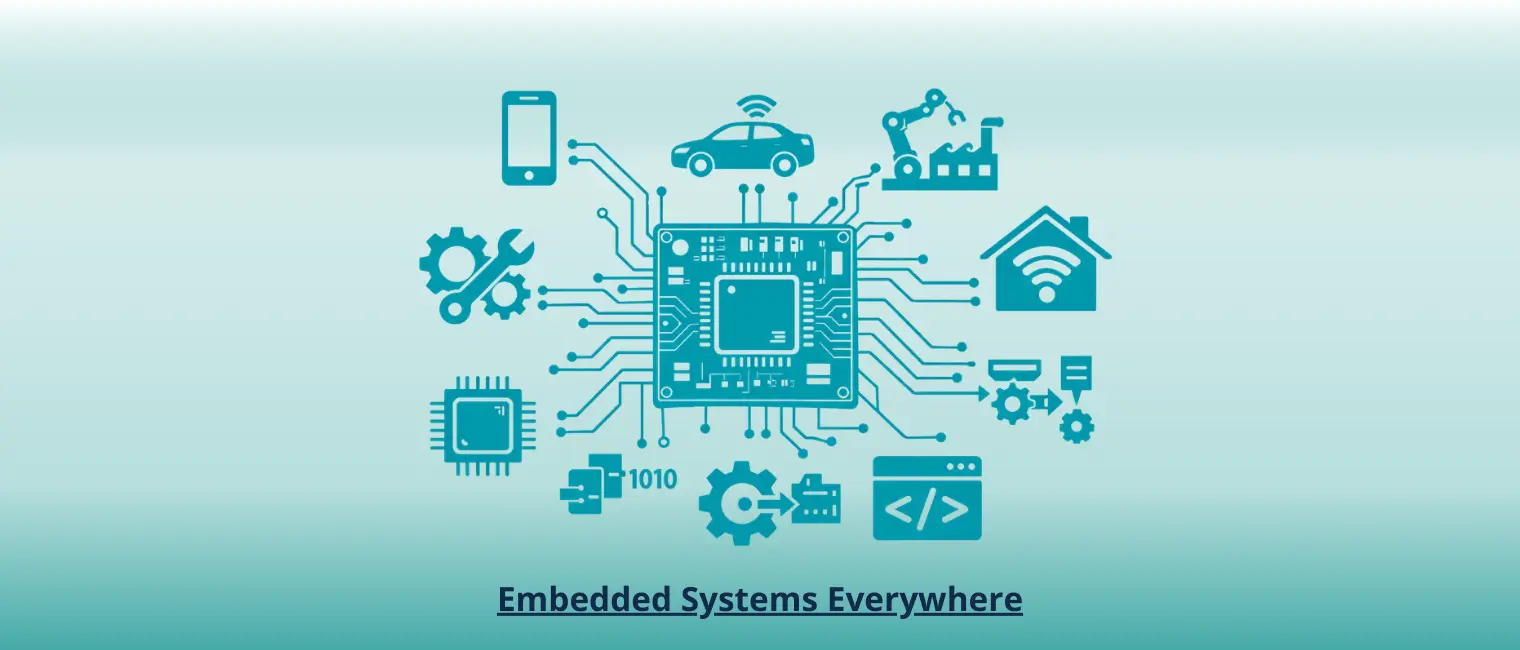
Embedded firmware development exists because of embedded systems. An embedded system is a computing platform. It is designed to do one thing within a bigger device. Unlike computers that can do things, embedded systems are built for just one job. This makes them work well with resources. They also last a long time without failing. It can find embedded systems anywhere.
are used in consumer electronics like smartphones and smart home devices. In cars, they help manage the engine and provide driver assistance. In factories, they help with tasks and monitor equipment. Every embedded system has a microcontroller or microprocessor at its core. This chip runs the firmware instructions.
The firmware decides how the system reads inputs, processes data, and produces outputs. Embedded systems and firmware go hand in hand. The hardware provides capability. The firmware provides control. To design a product, both must be engineered together from the start. Embedded systems are crucial. Firmware is essential for embedded systems. They work together seamlessly. The microcontroller executes embedded firmware instructions. Embedded systems rely on firmware to function. Firmware development is vital for embedded systems.
System Initialization and Boot Process
When power is turned on, every embedded device goes through a set startup sequence. Firmware is very important for this boot process because it gets the hardware ready and sets up the system resources.
The process starts with a bootloader that is stored in memory, which doesn’t lose data. The bootloader checks the hardware and gets the processor ready to run the firmware. It also works with some systems to update firmware and start up securely.
The firmware starts its initialization sequence after the bootloader runs. This step sets up the system’s clocks, memory controllers, communication interfaces, and peripheral modules. Hardware parts won’t work right if they aren’t set up properly.
Firmware loads the operating system’s kernel into memory and gives it control in systems that use an operating system. Firmware can run directly on smaller embedded devices without an operating system in between.
The boot process is one of the most important parts of making embedded firmware. A device may not be able to start at all if there are mistakes during initialization.
Managing Resource-Constrained Environments
Embedded systems only work with hardware that has very strict limits. For example, microcontrollers usually have only a small amount of RAM, a small amount of flash memory, and not very powerful processing power. So, firmware engineers must write software that works within those limits and makes the most of what they have.
Managing memory is one of the hardest things about writing firmware. It’s important to carefully assign every byte of RAM to avoid overflows or crashes that happen at random. While you’re developing, you need to keep an eye on things like stack size, buffer allocation, and even how memory breaks down over time.
Processing speed is just as important. Firmware needs to work quickly and reliably, and it needs to stick to a schedule. The whole system can slow down or get stuck in hard-to-fix bottlenecks if the code isn’t well-organized or the algorithms aren’t efficient.
You can’t ignore how much power you use. Many embedded devices run on batteries and need to last a long time between charges. To save power, firmware developers often add features like sleep modes, dynamic clock adjustments, or turning off peripherals that aren’t being used.
Storage limits also affect how firmware is put together. You shouldn’t keep data you don’t need, and your code should be short. Data is sometimes encoded or compressed to make better use of the memory that is already there.
Because of all these rules, embedded firmware development is a small field that needs a good understanding of both software and hardware.
Real-Time Operating Systems in Embedded Applications
Many modern embedded devices rely on real-time operating systems to do system tasks quickly and well. When you write RTOS firmware, devices can do a lot of things at once and still keep their timing promises.
A real-time operating system takes care of things like managing memory, scheduling tasks, letting processes talk to each other, and handling interruptions. It makes sure that the processor has time to do very important tasks when they need it.
In real-time systems, what happens is just as important as when it happens. You have to finish your tasks by the due date. If you don’t meet these deadlines, the system could break down, or people could be hurt.
The RTOS scheduling algorithms are responsible for the execution of tasks depending on their priority levels. Critical processes such as sensor monitoring and motor control are considered to have higher priority levels than background processes.
Another significant aspect of RTOS firmware development is interrupt management. Interrupts are hardware signals used to represent urgent events that require immediate attention.
