

Something that most people never see is very important to modern product development. Not all programs. Not dashboards in the clouds. Hardware.
The quality of the hardware that makes up an embedded system is what makes or breaks it. This includes industrial controllers, medical devices, EV subsystems, and smart cameras. You can fix bugs in the software. Mistakes in hardware last forever.
Here’s the thing: getting the hardware right is no longer just an engineering job as embedded products get smaller, faster, more connected, and more regulated. It’s a choice for business.
That’s where Hardware Design Services come in.
This blog explains why they are important, how they affect embedded products from the idea stage to the production stage, and what it really means to make hardware that can survive in the real world. We’ll look at industry data, real-world examples, and how companies like hardware engineering services companies see hardware as a long-term investment instead of just a schematic exercise.
The Embedded Hardware Market: Why the Stakes Are Rising
Let’s begin with some background. Experts in the field say that the global market for embedded systems will reach more than $150 billion by the end of this decade. Fortune Business Insights This growth will be fueled by automotive electronics, industrial automation, and connected devices. A large part of this spending is on hardware because every smart feature needs physical parts to work, like processors, memory, power circuits, sensors, and interfaces.
In many EV platforms, automotive electronics now make up more than 40% of the vehicle BOM cost. Industrial OEMs say that hardware failures that cause unplanned downtime cost manufacturers billions of dollars every year. In medical and surveillance systems, hardware design problems that lead to not following the rules can push back launches by months.
This really means that hardware engineering is no longer a support role. It’s either a risk multiplier or a way to get ahead of the competition.
What Are Hardware Engineering Services in Embedded Systems?
Hardware engineering services cover everything from designing and testing the physical electronics that go into embedded products to making sure they work. This includes picking the right parts, making the schematic, laying out the PCB, making sure the signals are clear, designing the power, figuring out the heat, bringing the product up, and helping with production.
Hardware Design Services give you more information about how to do things. They work on turning requirements into hardware that can be made, tested, and used in real-world situations like heat, noise, vibration, supply chain limits, and cost pressure.
When designing general electronics, you don’t have to worry about how embedded hardware will work with firmware, operating systems, and real-time workloads. You might have to work around the wrong hardware for months if you choose it. A good one makes everything clearer.
Why Hardware Engineering Is Critical for Embedded Systems
Embedded systems don’t fail in a nice way. They either work or they don’t. It’s annoying when a consumer app crashes. If a controller freezes on the factory floor, production stops. A problem with the camera in ADAS can be a safety issue.
Hardware engineering is important because embedded systems have to deal with problems that general-purpose computers don’t. Let’s take it apart.
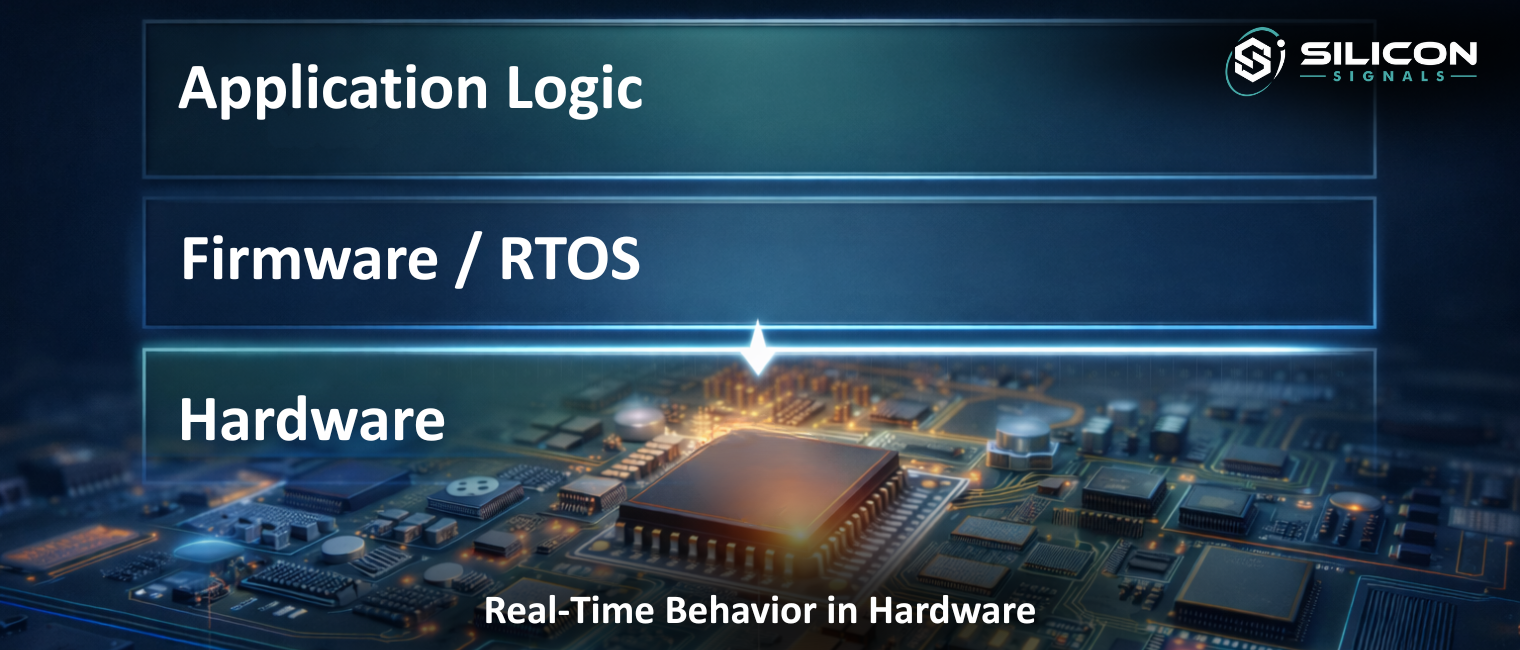
Real-Time Behavior Starts in Hardware
Timing isn’t just a matter of software logic. The hardware level is where clock stability, interrupt latency, bus arbitration, and peripheral behavior all start. No matter how good the firmware team is, picking the wrong MCU, SoC, or memory architecture can make real-time guarantees impossible.
Power Is a Hardware Problem First
Decisions about power architecture affect low-power modes, battery life, thermal stability, and EMI compliance. Engineers who don’t think about power when they design boards usually must redesign them.
Reliability Comes from Physics, Not Code
Simulations alone don’t show temperature drift, voltage changes, noise coupling, or the aging of components. Before products go on the market, hardware engineering services exist to plan for these situations.
Struggling with redesigns or unstable hardware in your embedded product?
Hardware Engineering Across Key Embedded Industries
Automotive and EV Systems
There are dozens of built-in controllers in modern cars. Powertrain control, ADAS cameras, infotainment, BMS units, and gateway ECUs all depend on hardware that has been carefully designed.
In automotive programs, Hardware Engineering Services make sure that:
- Functional safety readiness from the start
- MIPI, CAN, and Ethernet are instances of stable high-speed interfaces.
- Thermal endurance over a wide range of operating conditions
- Availability of components for a long time
A single flaw in the hardware can computer recall. That’s why car manufacturers are turning to specialized hardware design partners increasingly instead of general electronics vendors.
Industrial Automation and IIoT
Factories need uptime. Electrical noise, heat, vibration, and continuous operation must not bother the embedded hardware in PLCs, gateways, and sensors.
The main things that hardware design services in industrial systems focus on are:
- EMC-safe layouts
- Wide input voltage handling
- Isolation and protection circuits
- Long lifecycle components
What this really means is that there will be fewer calls for maintenance at midnight, and performance will be more predictable under stress.
Consumer and Smart Devices
Consumer products are under different kinds of stress: price, size, and power use. Hardware engineering strikes a balance between optimizing the BOM and meeting performance goals.
Smart wearables, home automation products, and cameras work when hardware allows:
- Compact form factors
- Fast boot times
- Stable wireless performance
- Long battery life
Taking shortcuts here can often cause overheating, RF problems, or high return rates.
From Idea to Production: Where Hardware Engineering Services Add Value
Ideation and Architecture
Most future costs and limitations are set in stone by decisions made early on hardware. Hardware engineering services help product teams ask hard but important questions early on.
- Is this processor really available in large quantities?
- Will this interface work with new features in the future?
- Can this design pass the tests for compliance?
Engineers who are good don’t just say yes. They talk about trade-offs before they cost a lot.
Prototyping and Board Bring-Up
This is where theory and reality meet.
Hardware Design Services schematic capture, PCB layout, prototype builds, and bring-up. This stage shows problems that no simulation can be found, such as problems with signal integrity, power instability, and hot spots.
Silicon Signals and other teams often do firmware bring-up hardware and validation at the same time. That tight loop cuts down on the number of iterations and speeds up the time it takes to make a working prototype.
Validation, Testing, and Compliance
Functional, environmental, and regulatory tests must all pass embedded hardware. Hardware engineering services offer structured validation plans, test fixtures, and help with documentation.
This step often keeps products from failing after they are released, when fixes are no longer cheap.
Production Support and Lifecycle Management
After a product is released, its hardware keeps changing. Parts reach the end of their life. Tolerances in manufacturing change. The firmware is getting bigger. Hardware engineering partners help with:
- Optimization of DFM and DFA
- Qualification of alternate components
- Analysis of field issues
- Changing hardware without breaking software
It is hard to build that continuity inside, but it is very important for embedded products that last a long time.
Real-World Example: Hardware Done Right
Think about a custom industrial camera platform that can run all the time. Instead of choosing a high-performance SoC and then scaling it down, engineers started with:
- Analysis of the power budget under the worst-case load
- Thermal modeling for enclosures without fans
- Space for future sensors to connect
The result was hardware that could handle firmware updates and AI workloads years later without needing to be redesigned. This is what makes hardware a cost center and an enabler.
Silicon Signals uses this way of thinking for camera systems, industrial controllers, and embedded gateways. They see Hardware Engineering Services as system engineering, not board drawings.
Key Benefits of Professional Hardware Engineering Services
It’s not about drawing schematics faster when you hire a professional hardware engineer. They’re about making the right choices early on, so the product doesn’t give you trouble later. When hardware is designed with purpose, the benefits grow throughout the product’s life cycle, from development to production. Let’s go over this step by step.
Fewer Redesigns
Most hardware delays aren’t caused by bad execution. They come from early ideas that were never questioned.
Before the first schematic is drawn, experienced hardware engineers spend a lot of time on architecture. They ask about processor selection, power budgets, interface margins, thermal behavior, component availability, and compliance requirements right away. That work stops the usual late-stage problems, like boards that don’t pass EMI, power rails that break under load, or interfaces that work in the lab but not in the field.
This really means fewer board spins, fewer last-minute fixes, and fewer awkward conversations late in the schedule. Each redesign that is avoided can save months, not just weeks, especially if the firmware and mechanical teams are already working together on a certain hardware revision.
Good hardware engineering cuts down on uncertainty early on, when changes are still cheap.
Faster Time to Market
Being fast in hardware development doesn’t mean rushing. It’s about not running into walls that you could have seen coming.
Teams that offer professional Hardware Engineering Services have already seen common failure modes, such as unstable clocks, power sequencing problems, and supply-chain-driven component substitutions that break designs. Instead of finding out about these risks the hard way, they design around them.
This experience leads to cleaner first prototypes and shorter cycles of iteration. The hardware works as expected, so firmware teams can start earlier. Validation happens sooner because there are fewer basic problems that stop testing.
As a result, the development loop is tighter. More time to improve the product because less time is spent fixing mistakes that could have been avoided. That’s how businesses get their products out on time without overworking their employees.
Planning an embedded product and want hardware that scales, lasts, and supports clean firmware development?
Better Software Outcomes
No matter what teams say, software quality is closely linked to hardware quality.
Firmware development is easy when the power rails are stable; the clocks are clean, and the peripherals act in a predictable way. Instead of chasing random resets or timing problems that come from problems with the board, engineers can focus on features and performance.
Professional Hardware Design Services put a lot of emphasis on clear and thorough documentation. There are clear definitions for pin mappings, boot behavior, power states, and hardware limits. That openness makes it easier for firmware and application teams to work together, especially when products change or new engineers join.
This really means that the software is less likely to break. Fewer workarounds that depend on hardware. Codebases that stay clean even after changes. Good software is easier to write and keep up with when the hardware is strong.
Long-Term Product Stability
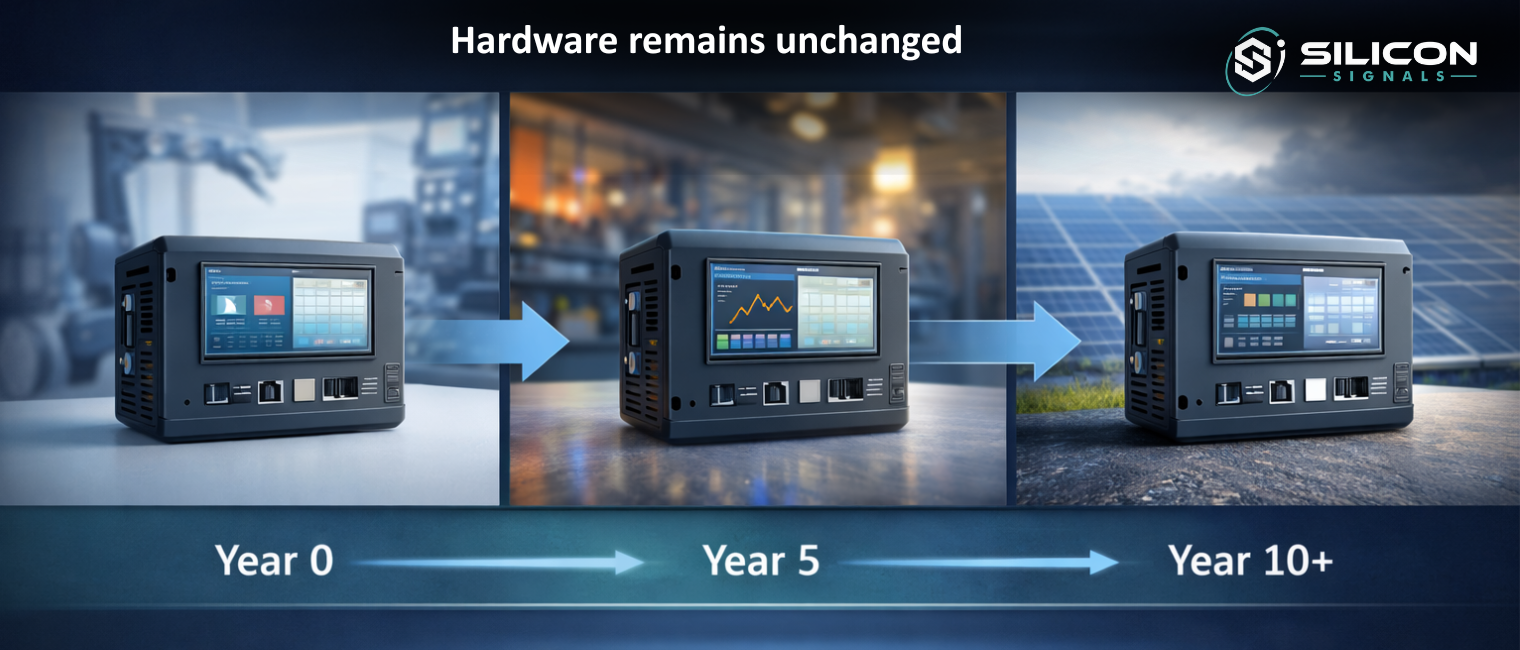
Embedded products don’t usually die quickly. Industrial controllers, medical devices, automotive subsystems, and infrastructure equipment often stay in use for a long time.
Hardware designed for the long term takes into account the life cycle of its parts, thermal stress, and the possibility of adding new features in the future. Engineers choose parts that are likely to be available, design margins that can handle aging, and architectures that let firmware grow without having to replace hardware.
This foresight pays off later. Products can still be supported. Field problems can be handled. You don’t have to redesign your hardware for updates. Customers don’t have to deal with fragmentation; they get consistency instead.
That’s a quiet but strong edge over the competition. While other companies rush to redesign their hardware because it is out of date or unstable, well-designed systems keep working well.
Emerging Trends Shaping Embedded Hardware Engineering
Edge AI Hardware Acceleration
AI at the edge is pushing hardware designers to add NPUs, accelerators, and high-speed memory while keeping heat and power under control.
Open-source Hardware Ecosystems
Standardized SoMs and open-source computer modules are changing the way products are built. Not only do hardware engineering services include board design, but they also include platform selection strategy.
Supply Chain-Aware Design
The industry learned a hard lesson from a lack of parts. From the start, Modern Hardware Design Services offers alternate sourcing and multi-vendor strategies.
Challenges That Make Hardware Engineering Harder Than Ever
Complexity Without Margin for Error
More interfaces. More protocols. Same size of the board.
Security Starts in Hardware
Silicon and board design, not firmware patches, are what make secure boot, trusted execution, and tamper resistance possible.
Long Product Lifecycles
The engineers who make embedded systems often leave their jobs before they break. It is important that hardware is easy to understand, well-documented, and easy to keep working.
Conclusion
This is the truth. In embedded systems, hardware isn’t a place where software can run. The product is hardware
Every choice you make about design will have effects on manufacturing, support, and field performance for years to come. Strong Hardware Engineering Services don’t just make boards work; they also make them better. They help businesses grow.
As embedded products keep powering cars, factories, hospitals, and infrastructure, hardware engineering is becoming less about electronics and more about being responsible.
Silicon Signals thinks of hardware in this way: systems come first; limitations are respected, and products are made to last in the real world, not just on lab benches.
Your hardware engineering strategy should be important if your embedded product is.
