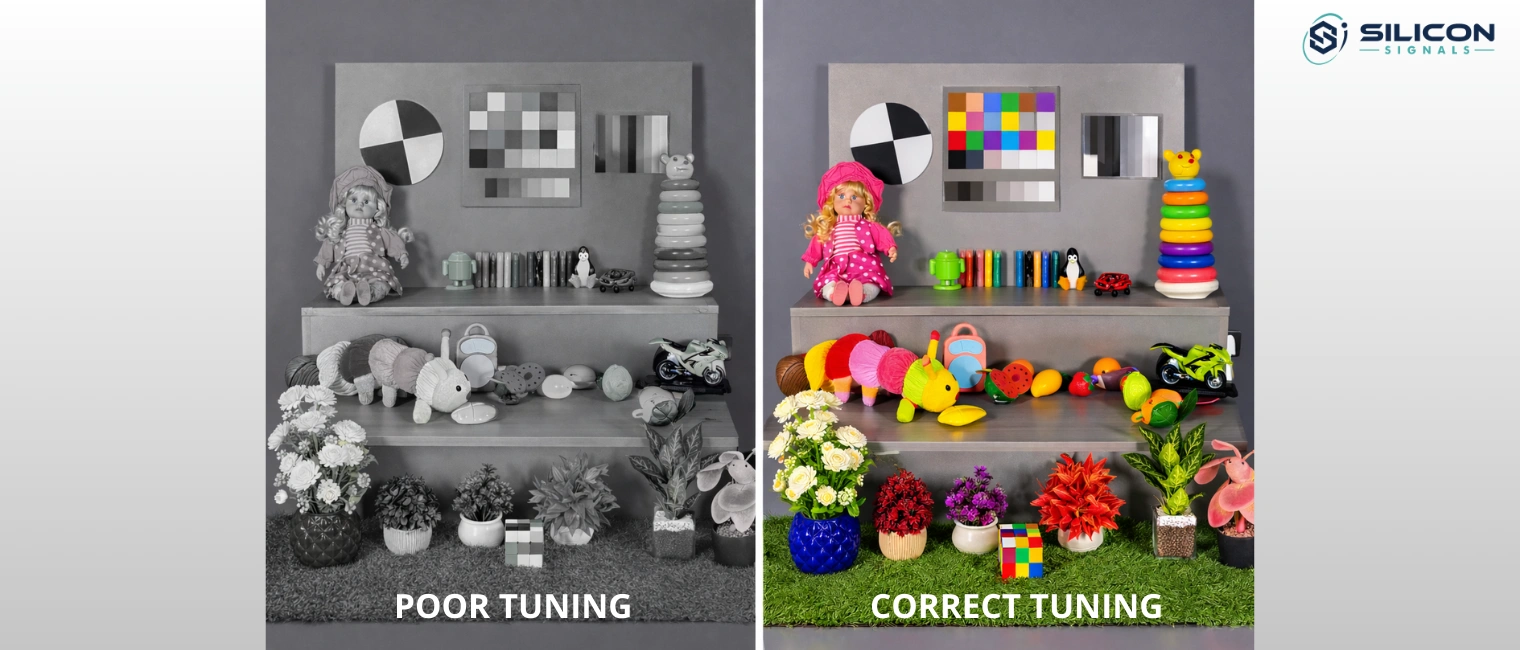
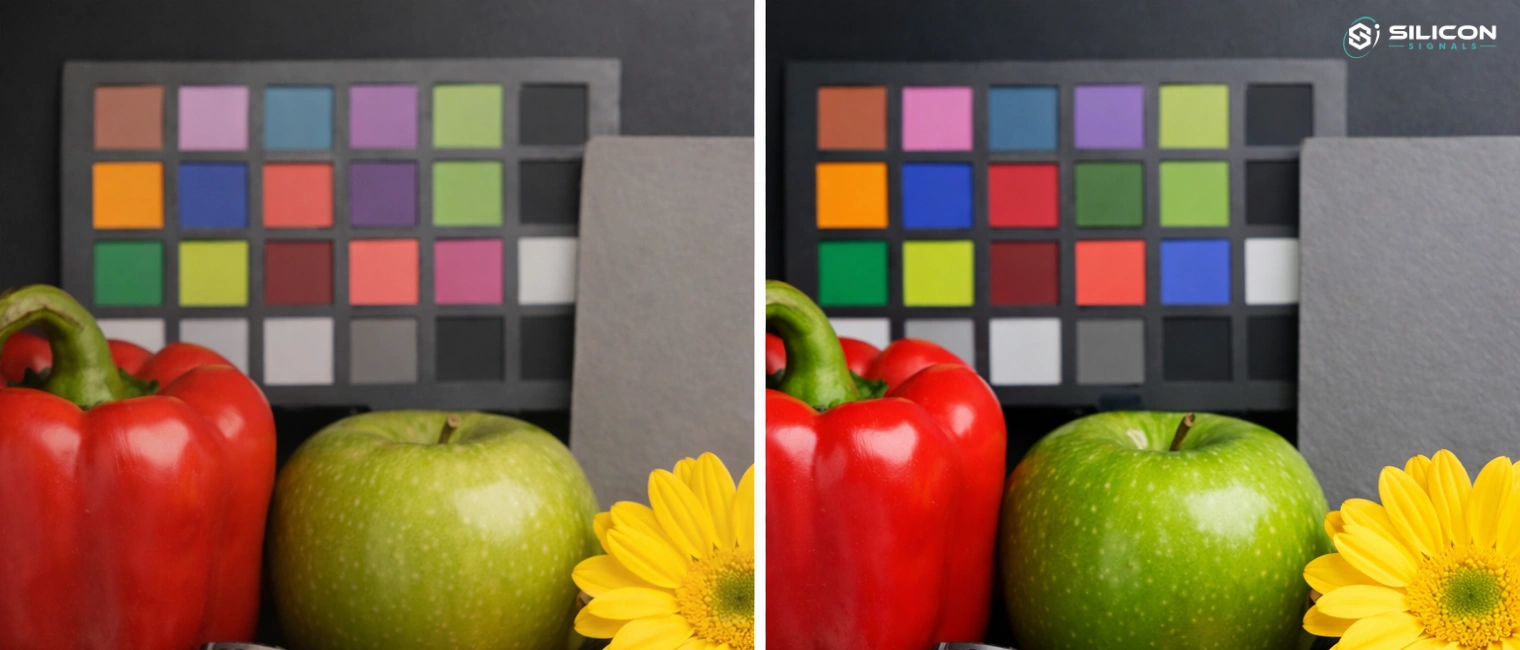
Today’s technology is dependent on visual intelligence. The quality of the image obtained from an inspection system, smart surveillance camera, or automotive perception system is what defines the performance of the product. A camera that fails to deliver high-quality images is not just aesthetically unappealing; it also underperforms.
It is at such junctures that camera tuning design service becomes essential. Cameras are not standalone hardware that can provide the best performance out of the box. The hardware needs to work in tandem with the software tuned into the camera for the best results.
For an OEM developing camera-based products, industrial-grade tuning is no longer optional; rather, it is the line that divides a successful prototype from a successful product.
According to a report published by Statista, the market for image sensors is expected to reach over $35 billion by the year 2027, thanks to the increasing demand for these sensors in automotive, security, healthcare, and industrial applications.
As the number of camera deployments increases in the market, the need for camera tuning services that provide the best results for the camera industry is also growing.
The Role of Camera Tuning in Production Systems
A camera module comprises various components that play an important role in the output of the camera. The components include the image sensor, lens stack, ISP pipeline, and processing algorithms. The image sensor output is not suitable for use in the camera, regardless of the hardware selected.
Camera tuning refers to the setup of the ISP pipeline such that the camera output attains the desired performance requirements. The parameters include exposure, color correction, noise reduction, sharpening, and tone mapping. The parameters are essential in the output from the image sensor.
The output from the camera is noisy, exposed, and lacks consistency in lighting conditions. The lighting conditions are worse in industries and cars, where the lighting varies dramatically.
The camera must work well in lighting conditions such as daylight, indoor lighting, low light, and high dynamic range. Proper camera tuning design ensures that the camera pipeline can work well in the lighting conditions.
Planning a camera-based product?
Talk to our engineers about sensor selection, optical design, ISP tuning, and production-ready camera modules.
Why OEM Products Require Specialized Camera Tuning
Consumer cameras are focused on visual aesthetics, whereas industrial cameras are focused on accuracy and repeatability. The tuning strategy differs significantly.
For example, for surveillance, the camera needs to have good exposure and low light performance so that the image is visible at night. The camera for factory inspection needs good sharpness and color accuracy so that the inspection can be done properly. The camera for the automobile needs good performance at extreme lighting variations such as going through tunnels, headlights, and sunlight.
Industrial products are exposed to various environmental factors that are different from the laboratory environment. The temperature variations, movement, vibrations, and degradation of the sensors also play an important role in the output of the camera. The camera tuning service for industrial products takes these factors into consideration so that the camera behaves consistently over the product lifecycle.
A well-tuned image pipeline ensures that the algorithms are fed good input. If the image quality is good, the output of the algorithm will also be good.
Understanding the Camera Image Pipeline
All camera systems have an image processing pipeline. The pipeline takes the raw images captured from the camera and produces the final image that is displayed or analyzed.
The first step in the pipeline is the image sensor, which captures the raw pixel values from the image. The raw pixel values are the raw information captured from the image, including the amount of light that hits the image. The raw pixel values go through multiple stages of processing before the final image is produced.
second step in the pipeline involves black level correction and lens shading compensation. The image captured from the camera often has an uneven brightness level. The uneven brightness level is often the result of the optics. The camera uses lens shading correction for the uneven brightness level.
The third step in the pipeline involves demosaicing. The camera captures the raw pixel values from the image, but the raw pixel values are only able to capture the amount of light that hits the image.
The color correction matrix makes the sensor colors conform to the colors in the real world. Exposure algorithms calculate the duration for which the sensor will be exposed to the light. White balancing algorithms ensure that the colors in the image look normal in different lighting conditions.
Noise reduction algorithms minimize the sensor noise, especially in dark environments. Sharpening filters help in making the image clearer by sharpening the edges of the image.
Tone mapping and gamma correction help in defining the brightness of the final image. This ensures that the dark areas and the light areas of the image are visible.
Each of the steps in this process has to be parameterized. Any small changes in the parameters have a significant effect on the final image.
This is the reason why camera tuning design services need to have a good understanding of the hardware and the image processing algorithms.
Sensor Characterization and Calibration
Another significant aspect of RTOS firmware development is interrupt management. Interrupts are hardware signals used to represent urgent events that require immediate attention.
Before the start of the tuning process, the sensor must be characterized. Sensor characterization is a well-defined process in which the image sensor’s response to light, color, and temperature is measured.
Test images are taken using the image sensor by the engineers. Charts and light sources are employed in the measurement of the image sensor’s performance metrics, including signal-to-noise ratio, color accuracy, and sensitivity.
These metrics are then used by the engineers to create models of the image sensor’s performance. The tuning process is then performed based on these models.
Another significant step in the image sensor tuning process is the calibration of the image sensor. Differences in camera modules are caused by variations in the manufacturing process. Calibration is performed to ensure the image sensor’s consistent performance.
This is particularly necessary in industrial environments where the cameras are used in groups. The cameras are tuned in such a manner that the brightness and color of the image are similar in all cameras.
Industrial camera tuning is performed by expert professionals and involves the image sensor’s characterization and calibration for predictable performance in all camera modules.
Tuning for Challenging Lighting Conditions
The most unpredictable factor in the imaging system is the lighting. Cameras have to perform in various lighting conditions, ranging from high illumination in outdoor environments to extremely low illumination conditions. Exposure algorithms play a significant part in adapting the cameras to the changing environments.
Automatic exposure systems measure the brightness of the scene and change the exposure time and sensor gain appropriately. High dynamic range scenes involve processing the scene. For example, in a scene containing both sun and shadow, the dynamic range of the sensor will be exceeded. High dynamic range processing involves taking multiple exposures of the scene and combining the images. In the case of low light, the sensor gain has to be increased. Increasing the sensor gain increases the signal and the noise.
Noise reduction algorithms have to be implemented in such a way that the image is clear and the details are preserved. Industrial cameras have the ability to use infrared illumination and night vision. Such cameras have different tuning requirements compared to cameras designed for normal daylight imaging. Camera tuning design services involve understanding the expected lighting conditions in the final application and tuning the ISP appropriately.
Color Accuracy and Visual Consistency
Color accuracy tends to be underestimated for various industrial imaging systems. However, inaccurate color reproduction can influence analytics results and the way humans interpret the results.
White balance algorithms are applied to the image so that neutral surfaces are reproduced as white. The white balance algorithm compensates for the color temperature variations from different light sources.
Color correction matrices are used on the image to map the sensor’s color response to a standard color space. Using color charts to calibrate the measurements, the color correction matrices are made.
For medical imaging, agricultural monitoring, and many industrial inspection systems, color accuracy is very important because color changes give important information.
Properly tuning the camera for different industries makes sure that colors are always the same, no matter what kind of lighting or production unit is being used.
Noise Reduction and Detail Preservation
Noise is an inherent property of image sensors. Noise is more prominent in low-light conditions, as the sensor attempts to pick up even low levels of illumination.
Noise reduction filters try to eliminate noise, but in doing so, it is also important that important details of the image do not get compromised.
Spatial filtering techniques involve analyzing neighboring pixels of an image. Temporal noise reduction involves analyzing consecutive frames of a video stream to eliminate random noise.
This is one of the challenges that professional camera tuning design services help to solve. For machine vision, it is important that fine detail is maintained in images, as it is used by algorithms to classify objects.
Performance Optimization for Embedded Platforms
Camera pipelines may make use of embedded processors such as SoCs with integrated ISPs. Such processors have limited computational power and power budgets available to them.
In tuning such image pipelines, not just image quality but also efficiency is an important criterion. There are cases wherein image algorithms have to be simplified to meet efficiency criteria.
An example is high-resolution video processing. Engineers may have to adjust the image processing stages or the frame rates to keep the image pipeline running stably.
Hardware accelerators are available in SoCs to help with image processing functions such as demosaicing and noise reduction. Tuning services should know how to make use of such hardware accelerators available in SoCs
Efficient implementation is required so that industrial camera tuning services provide high image quality within limited power and processing budgets.
Struggling with camera performance or scaling issues?
Get an expert review of your existing camera design and identify risks before they reach production.
However, camera tuning is not complete after the parameters have been adjusted. Validation comes in at this point. It is the process that guarantees the camera system will function correctly in different situations.
The validation process involves the testing of the camera in different lighting conditions, temperature ranges, and motion states. It involves the evaluation of the images obtained in terms of the level of noise, the precision of the colors, and the stability of the exposure.
Thousands of images are obtained through the use of automatic testing frameworks during the validation process. This ensures that the camera is able to function correctly even in situations that are considered extreme.
OEMs use professional camera design services in the completion of the validation process.
Camera Tuning for AI and Machine Vision Applications
In modern camera systems, it is common to find that machine learning is used. For the machine learning system to work properly, image quality must be consistent.
If image quality is not consistent, it can affect the performance of the image. For instance, if the image is not exposed properly, it can affect the performance of an object detection or classification system. Small changes in the image can affect the performance of the system.
In machine learning applications, it is common to find that tuning strategies focus on maintaining image features rather than making the image look better. Edge definition, contrast, and dynamic range are more important in machine learning applications.
In industrial applications, it is common to find that cameras are used in various applications. For instance, in an industrial environment, it is common to find that camera tuning services ensure that image quality is consistent.
Conclusion
Camera systems have become a critical component of embedded products. Camera systems allow machines to see the environment and make intelligent decisions. However, the effectiveness of the camera system depends on the level of tuning of the imaging pipeline.
Professional camera design services help convert raw sensor data into reliable vision that works in the real world. Professional services ensure the effectiveness of the camera system through sensor characterization, image processing pipeline optimization, and production environment validation.
Professional services ensure that the cameras provide reliable and consistent performance in the real world. For OEMs in the business of developing products that
incorporate cameras, using specialized services of industrial camera tuning services provides significant benefits in terms of reduced risk and improved quality of the final product.
Silicon Signals provides dedicated imaging expertise and specialized camera development infrastructure that helps product companies develop reliable camera systems. They have the expertise and facilities that help OEMs deploy reliable camera systems that perform consistently in the real world.
About the Author
Rutvij Trivedi
Rutvij Trivedi is an Architect with Decades of Embedded Product Engineering, Software, and System Development. He has led Fortune 500 projects across Automotive, Consumer Electronics, Aerospace, IoT, Healthcare, and Semiconductor industries and is Upstream contributor in projects like Linux and Zephyr OS for multimedia