

The process of obtaining a high-quality image is not just limited to the camera sensor and lens. Instead, the real processing happens after the light hits the sensor, and the raw image processing turns the raw image into a useful image. This process is controlled by the Image Signal Processor and further optimized by ISP tuning.
Based on industry insights and information shared by organizations such as the International Imaging Industry Association (I3A), more than 70% of the image quality perceived by the end user is controlled by software processing and not the hardware. This justifies the importance of ISP tuning in the industry today.
ISP tuning, also known as Image Signal Processing tuning, is the process by which the image is ensured to be accurate, consistent, and optimized in all lighting conditions. This is not a simple process but a systematic approach to aligning hardware and software capabilities.
What ISP Tuning Really Means in Modern Imaging
There is an Image Signal Processor that acts as an intermediate step between the sensor and the output. The images captured by the sensor are in raw form and are not in the best condition to be sent as an output. This is where the Image Signal Processor helps in improving the quality of the images by processing the images in various algorithms.
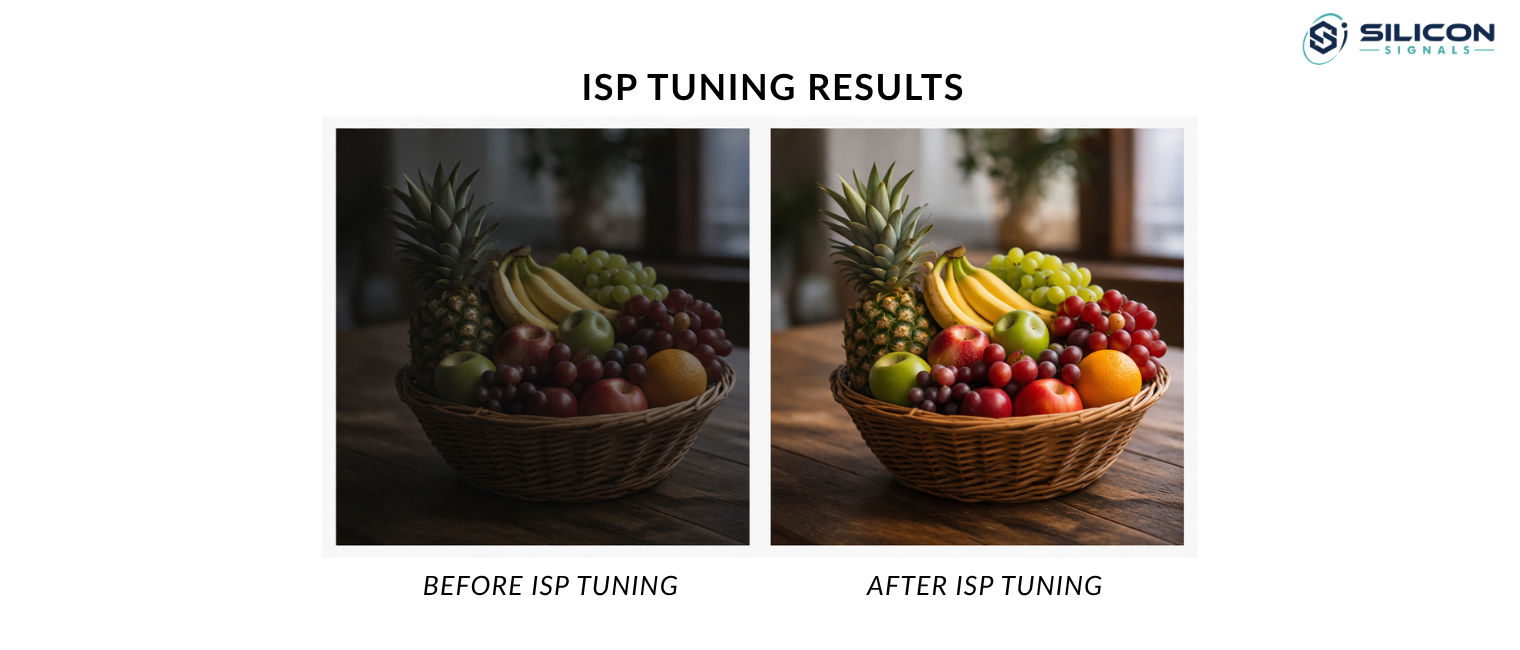
ISP Tuning refers to the process of fine-tuning the Image Signal Processor. This involves the parameters required to control the images in terms of exposure, color, noise, and sharpness depending on the application.
One must understand the importance of ISP Tuning by understanding the differences and the application of the images. For example, the application of a smartphone camera requires images with vibrant and appealing colors. On the contrary, the application of a surveillance camera requires images with high accuracy and clarity, especially in low light. Similarly, the application of a medical camera requires images with high accuracy and no enhancement.
Why Image Signal Processing Tuning Is Critical
Image Signal Processing tuning is not a choice in the design of cameras today. It has considerable consequences on the camera’s performance and user experience.
Firstly, it has consequences on the camera’s image quality in practical usage. Lighting conditions are never consistent. They vary in contrast, motion, and temperature. ISP tuning ensures the camera’s proper response to all such varying lighting conditions.
Secondly, ISP tuning makes it easier to ensure consistency. A camera’s proper tuning ensures consistent performance in all lighting conditions. This means the camera will perform consistently whether indoors or outdoors, from indoor lighting to harsh sunlight.
Thirdly, ISP tuning makes differentiation easier. There are many products on the market today, and many cameras have similar sensors and processing technology. ISP tuning makes one camera stand out from the other.
Fourthly, ISP tuning also affects regulatory compliance. In India, camera systems need to meet standards like STQC certification. Proper tuning helps build camera solutions aligned with STQC requirements, making it easier to pass testing and use them in real-world applications.
Building a camera product and need precise tuning for real-world performance and compliance?
The Structure of an ISP Pipeline
The understanding of the concept of ISP tuning can be made easier by understanding the structure of the ISP pipeline. This includes the demosaicing stage, which involves the conversion of the raw Bayer images into full-color images. The second stage involves noise reduction, which eliminates unwanted artifacts from the images.
The white balance correction involves the correction of images to remove unwanted effects caused by the usage of different sources of light. This is followed by the correction matrices, which correct the images in terms of color. This is done based on the calibration data used. This is followed by exposure correction, which ensures the images are correctly exposed. This is then followed by tone mapping correction, which ensures the images have the correct dynamic range. Sharpness correction enhances the images without introducing unwanted artifacts.
The understanding of the parameters involved in the above process will give an idea of the complexity involved in the process.
The ISP Tuning Workflow Explained
The process of ISP tuning has a structured workflow. It begins with understanding the hardware and ends with real-world validation. During the process, every step follows the previous one in a manner such that the output meets the desired quality standards.
Sensor and System Characterization
The first step in ISP tuning involves understanding the image sensor. This includes the size and sensitivity of the pixels, the noise profile, and the dynamic range. Additionally, the pattern of the color filter array also influences the raw sensor data.
The ISP itself is also characterized. ISPs provide different levels of tuning for the processing modules. While some ISPs provide a lot of tuning capabilities, others provide limited tuning capabilities.
This step lays the foundation for the entire process. If the characterization is inaccurate, the output will be inconsistent.
Optimization of Core ISP Parameters
Once the baseline is established, the tuning process begins with different modules of the ISP pipeline.
In auto exposure tuning, it is ensured that the images are not too bright or dim in different lighting conditions. It includes the creation of exposure tables, fine-tuning the speed of the convergence, and smooth transition in lighting conditions.
In white balance tuning, it is ensured that the reproduction of correct colors in the image is achieved. It includes the fine-tuning of the white balance in different lighting conditions ranging from warmer tones in indoor conditions to colder tones in natural light conditions.
In color correction, the reproduction of the correct colors in the image is achieved. It includes the creation of matrices and lookup tables in test conditions.
Noise reduction is one of the toughest parts of the ISP pipeline. The goal here is to reduce the noise in the image without compromising the details. Various techniques are used in different conditions, such as spatial noise reduction in low light conditions.
In sharpness of tuning, the enhancement of the edges of the image is done without the creation of halos. The goal here is to maintain the sharpness of the image without compromising the texture.
Objective Image Quality Evaluation
Once the camera is tuned, it is then put to the test. The camera is tested in accordance with standardized parameters. The parameters involve taking pictures using test charts under specific lighting conditions.
Quantitative parameters such as the resolution of the camera, color accuracy, dynamic range, and noise levels are determined using special software. These parameters provide deeper insights into camera performance.
Testing involves conditions from very low light conditions to very bright conditions. The camera is tested in various conditions in terms of color.
Subjective Real-World Validation
Once the camera has been tuned, it is then put to the test. The camera is tested based on standardized parameters. This involves the camera taking photographs of a chart in a specified lighting condition.
Quantitative parameters such as resolution, accuracy of colors, dynamic range, and noise are determined using special software. These parameters give in-depth knowledge about the camera.
The camera is tested in conditions ranging from very low to very high. The camera is tested in different conditions in relation to colors.
Iterative Refinement
The process of ISP tuning is a cyclical process. This is because, according to the feedback received from the test results, further tuning is done on the parameters.
This process goes on until the right balance is achieved for both objective and subjective qualities. The final result is a tuned system that is reliable and works well with all the use cases.
Key Components of ISP Tuning in Detail
ISP tuning is composed of different components. All these components contribute to the quality of the image.
Auto exposure ensures that the image is not too dark or light. It should be consistent in the image.
Auto white balance corrects the image for different lighting sources. That ensures that the white in images is accurate.
Auto focus, although a separate entity, works in conjunction with ISP tuning. It ensures images are in focus and well defined.
Noise reduction eliminates unwanted features from the image. This is especially important in images obtained in low light.
Color processing refers to the way in which images represent different colors.
Sharpness enhancement improves the image, although it must be done in a way that does not produce unnatural effects.
Objective vs Subjective Testing in ISP Tuning
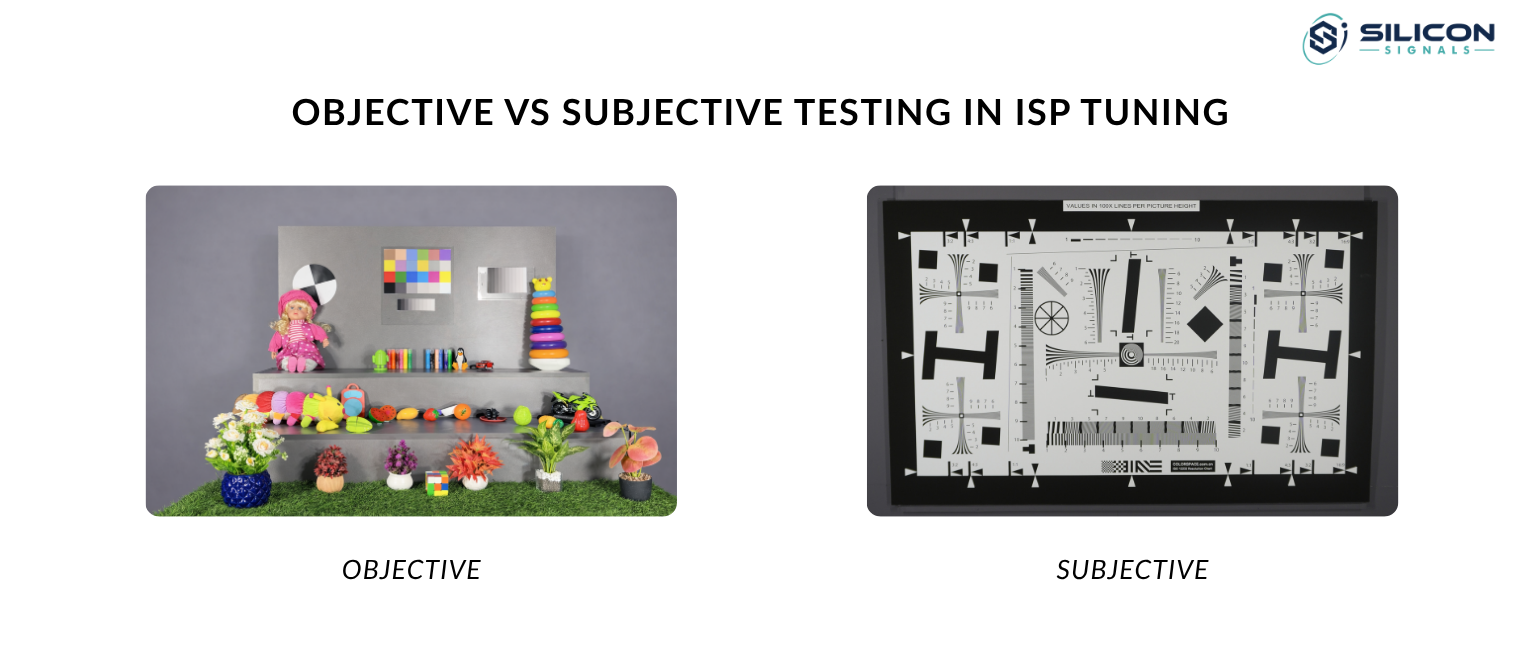
Image quality assessment is carried out through objective testing and subjective testing.
In objective testing, measurable parameters are used. Charts are used in the testing environment. The environment is controlled.
Subjective testing is done based on human perception. It is done based on the way the image looks or feels.
For the ISP tuning process to be successful, it is important to consider both objective testing and subjective testing. It is important to consider the technical aspect as well as the aesthetic aspect.
Struggling to achieve consistent image quality across different lighting conditions and camera modules?
Benefits of Effective ISP Tuning
There can be different advantages with the help of proper tuning of ISP.
Improvement in the quality of the image is significant. This can be seen with the improvement in the reproduction of color, reduction of noise, and the presence of more details in the image. This is essential in the context of the satisfaction of users and the image of the product.
Consistency is assured under different conditions of illumination. This is essential in the context of applications like surveillance systems or automotive systems.
Customization is possible with the help of ISP. With the help of such customization, the manufacturers can tune the image output as per their specific needs. This is essential in the context of creating differentiation in the environment that is highly competitive.
Optimization of performance is assured with the help of ISP. This means the hardware is used in the maximum potential way. This is essential in the context of achieving the maximum ROI in the case of hardware technology.
Challenges in ISP Tuning
ISP tuning is a complex and labor-intensive process. It involves knowledge of imaging science, hardware, and software.
The greatest challenge in ISP tuning is finding the right balance between the various requirements. For instance, over-reduction of noise might cause images with insufficient details. Similarly, over-sharpening might cause artifacts.
The second greatest challenge in ISP tuning is handling the various lighting conditions. The camera has to work in both low and high lighting conditions. These lighting conditions may be the same or opposite.
Hardware is another area of concern. This includes the capability of the ISP and sensor, which defines the scope in which the tuning can be done.
Lastly, there is the issue of consistency across different hardware and production.
Applications of ISP Tuning Across Industries
ISP tuning has many different applications in different industries. However, the requirements of the industries vary.
In the case of smartphone devices, the primary goal is visual appeal (or perceptual quality). This means the ISP is tuned for more vibrant colors and high dynamic range to produce images that are “pleasing” to the human eye.
In the case of surveillance cameras, the main requirements are fidelity and detail retention, especially in low-light conditions. ISP tuning ensures that information remains accurate and clear for identification purposes, even in challenging environments.
In the case of automotive devices, the main requirement is reliability and real-time processing. ISP tuning makes it possible to have advanced driving assistance and autonomous driving.
In the case of industrial and machine vision devices, the main requirements are precision and accuracy. ISP tuning makes it possible to have accurate information.
These different requirements in different industries show how much importance ISP tuning has.
Conclusion
ISP Tuning is at the heart of image quality today. ISP Tuning is the key to unlocking raw sensor data to useful visual information, providing accuracy, consistency, and performance in any application.
ISP Tuning involves an in-depth knowledge of hardware as well as software-related aspects. ISP Tuning is an intricate but very important aspect to achieve differentiation in today’s highly competitive imaging marketplace.
To any organization seeking to create camera-based solutions, ISP tuning is not only desirable but, in fact, critical to success. Leveraging camera tuning design services for OEMs ensures that imaging systems are optimized for real-world performance, scalability, and compliance from the ground up.
Silicon Signals’ approach to ISP tuning is based on an engineering-first philosophy, with an emphasis on aligning sensor, ISP, and application world needs. By combining structured ISP tuning with its expertise in embedded systems, Silicon Signals helps create high-performance camera systems for various industry needs.
